
 +86 13096987266

Taxifolin(Dihydroquercetin)98% hplc
product description
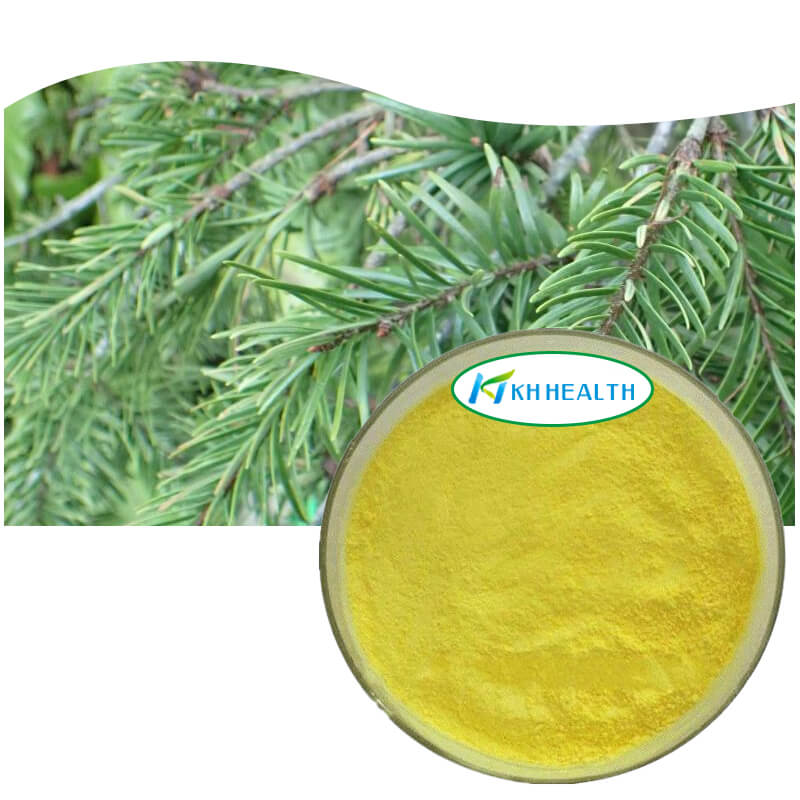
Taxifolin, also known as dihydroquercetin, is a dihydroflavonol antioxidant (CAS 480-18-2, molecular formula C15H12O7) naturally present in Siberian larch (Larix sibirica), Douglas fir bark, milk thistle, and onion. Because its structure contains one fewer double bond than quercetin, taxifolin is markedly more water-soluble and is widely regarded as a more bioavailable member of the quercetin family.This product is an off-white to pale-yellow fine powder at ≥98%; light-yellow to yellow-green powder at 80–95% grades. Characteristic odor, slightly astringent taste.
Available Specifications**: 80%, 90%, 95%, 98% (HPLC, area normalization).
Why Choose Standardized Taxifolin?
Unstandardized plant powders vary naturally with harvest season, tree age, and extraction method. Our taxifolin is standardized to a verified 90%, 95%, or 98% assay by HPLC against certified reference standards, so formulators can dose on a consistent marker basis from batch to batch. The fine, free-flowing powder blends cleanly into capsules, tablets, sachets, beverages, and topical systems, and its antioxidant activity also supports shelf-life extension in oxidation-sensitive food formulas. Clean-label credentials — Non-GMO, vegan-friendly, KOSHER and HALAL options — make it a strong fit for premium global brands.
Manufacturing & Quality Control
Raw Material Traceability — Siberian larch or Douglas fir bark is sourced from qualified suppliers and screened for pesticides, heavy metals, and microbial load before release.
Controlled Extraction — Water/ethanol extraction under controlled temperature preserves the flavonoid structure; purity is concentrated to the target 90–98% assay.
Batch-by-Batch Testing — HPLC assay, moisture, ash, particle size, heavy metals, and microbiology are verified on every lot.
Sealed Warehousing — Cool, dry, light-protected storage maintains marker stability across the 24-month shelf life.
product benefits
1. Superior Antioxidant Capacity — Five phenolic hydroxyl groups enable direct scavenging of hydroxyl, superoxide, and peroxyl radicals, plus transition-metal chelation (Fe²⁺/Cu²⁺), reducing Fenton-reaction-driven oxidative damage.
2. Enhanced Stability vs. Quercetin — As the reduced (dihydro) form, taxifolin retains activity through heat processing and prolonged shelf storage, a critical advantage for beverage, baked-good, and softgel applications.
3. Cardiometabolic & Microvascular Support — Preclinical data indicate capillary-protective, lipid-modulating, and blood-pressure-regulating pathways, supporting positioning in heart-health and circulation supplement lines.
4. Anti-Inflammatory & Immunomodulatory Activity — Modulates NF-κB and pro-inflammatory cytokine expression, relevant for sports-recovery, joint-health, and immune-support formulations.
5. Neuroprotective Potential — Recent rodent studies link DHQ supplementation to reduced neuroinflammation, apoptosis, and pyroptosis, supporting cognitive-aging and brain-health product development.
6. Skin-Repair & Photo-Protection — Topical and ingestible studies show mitigation of UV-induced oxidative stress, supporting anti-aging serums, day creams, and oral beauty-from-within products.
product Applications
1. Antioxidant Supplements
Taxifolin provides a water-soluble flavonoid antioxidant that formulates cleanly into capsules, tablets, sachets, and liquid drops, and pairs well with vitamin C, resveratrol, or CoQ10 in composite antioxidant formulas.
HPLC-verified 90–98% assay positions it as a premium, measurable "next-generation quercetin" active — verifiable on every COA, which strengthens finished-product claims and buyer trust.
2. Cardiovascular Health
Taxifolin's research profile centers on capillary strength, vascular integrity, and microcirculation support, making it a natural complement to omega-3, plant sterols, and beet-based nitrate actives.
A standardized, batch-consistent active gives cardiovascular lines a defensible science story and reproducible dosing — critical for regulated heart-health label space.
3. Skin Health
Ingestible beauty ("beauty from within") continues to grow as consumers look for oral actives that support skin resilience alongside topical routines.
As an antioxidant supporting collagen protection and oxidative-stress balance, taxifolin fits beauty supplements in capsule, gummy, or stick formats alongside collagen peptides and hyaluronic acid.
4. Food Preservation
Taxifolin's free-radical scavenging activity protects unsaturated fats and oxidation-sensitive matrices; usage levels are application-tested for each food matrix to balance efficacy, taste, and cost.
A standardized, food-grade, Non-GMO antioxidant with full documentation supports clean-label claims and simplifies regulatory submission files for export markets.
5. Cosmeceuticals
Taxifolin's partial water solubility and stability allow incorporation into aqueous and emulsion cosmetic systems; a water-soluble grade is available for clear serum and toner formats.
High-purity (95–98%) assay with heavy-metal screening and per-batch COA satisfies cosmetic-grade requirements and supports premium anti-aging positioning.
Client Case
European Nutraceutical Brand
A European nutraceutical brand developing a water-soluble antioxidant line switched its active from quercetin aglycone to our 95% taxifolin grade after struggling with poor solubility in their stick-pouch format. The verified HPLC assay simplified their COA review, and the water-soluble profile allowed clean incorporation without masking agents. The brand now sources on a recurring quarterly schedule and has extended the active into a second beverage product line.
North American Functional Beverage Producer
A U.S. beverage formulator needed a heat-stable antioxidant for an RTD (ready-to-drink) wellness line undergoing HTST pasteurization. Our 95% DHQ grade was selected over standard quercetin due to its superior thermal retention; pilot trials retained >92% active content after pasteurization and 6-month accelerated stability.
Asian Cosmetics R&D Center
A Korean skincare lab integrated 98% cosmetic-grade taxifolin into an anti-aging serum line at 0.3–0.5% loading. The ingredient's free-radical scavenging (DPPH/ORAC) and UV-protection data supported the product's "oxidative-stress defense" positioning, with full heavy-metal and microbial clearance meeting KFDA cosmetic import requirements.
FAQ
Q1: What is the difference between taxifolin and quercetin?
A: Taxifolin (dihydroquercetin) is the reduced form of quercetin, with an extra pair of hydrogen atoms at the C2–C3 position. This gives it five phenolic hydroxyl groups, better water solubility, higher thermal stability, and a more favorable toxicity profile (no mutagenicity signal in silico) compared with quercetin.
Q2: What purity grade should I choose?
A: For dietary supplements, cosmetics, and pharmaceutical adjuvants, we recommend 95–98% HPLC. For functional food fortification and industrial antioxidant use, 80–90% offers a cost-performance balance. Our team can recommend a grade based on your target dosage form and label claim.
Q3: Is taxifolin approved for use in the EU and the U.S.?
A: Taxifolin-rich extract from Larix gmelinii was authorized as a Novel Food by EFSA in 2017 for use in food supplements and specified food categories. In the U.S., it is marketed as a dietary supplement ingredient under DSHEA; brands should ensure structure/function claim compliance and may pursue self-affirmed GRAS for food applications. We provide reference documentation to support your regulatory filing.
Q4: What is the shelf life and storage condition?
A: 24 monthsin original sealed packaging when stored at ≤ 25°C, RH ≤ 60%, away from direct light. Taxifolin is sensitive to alkaline pH and high humidity; we recommend neutral-to-slightly-acidic formulation pH and moisture-controlled processing.
Q5: Can you provide samples?
A: Yes. Free 10–20 g samples are available for qualified R&D/procurement evaluation (customer covers courier cost). Larger sample quantities (100 g–1 kg) are available at sample pricing.
Q6: What is the minimum order quantity and lead time?
A: MOQ is 1 kg. Stock items (90%, 95%, 98%) ship within 3–7 working days. Custom grades or tonnage orders require 15–25 working days production lead time.
Q7: Do you offer liposomal or solubility-enhanced taxifolin?
A: Yes. We can supply liposomal taxifolin, lecithin-complexed, and β-cyclodextrin-inclusion grades with improved water solubility and bioavailability, suitable for beverages, sublingual sprays, and high-bioavailability supplement lines.
Q8: Can you support private-label / contract manufacturing?
A: Yes. We offer finished-dose contract manufacturing (capsules, tablets, sachets, softgels) under your brand, with full COA, label review, and regulatory documentation support for export markets.
KH Health is your trusted partner, dedicated to listening to customers, solving every problem, and providing quick responses. For any questions or assistance regarding, feel free to contact us at:
Email: sales@kh-health.com
WeChat: +86 13096987266
WhatsApp: +86 18792880979
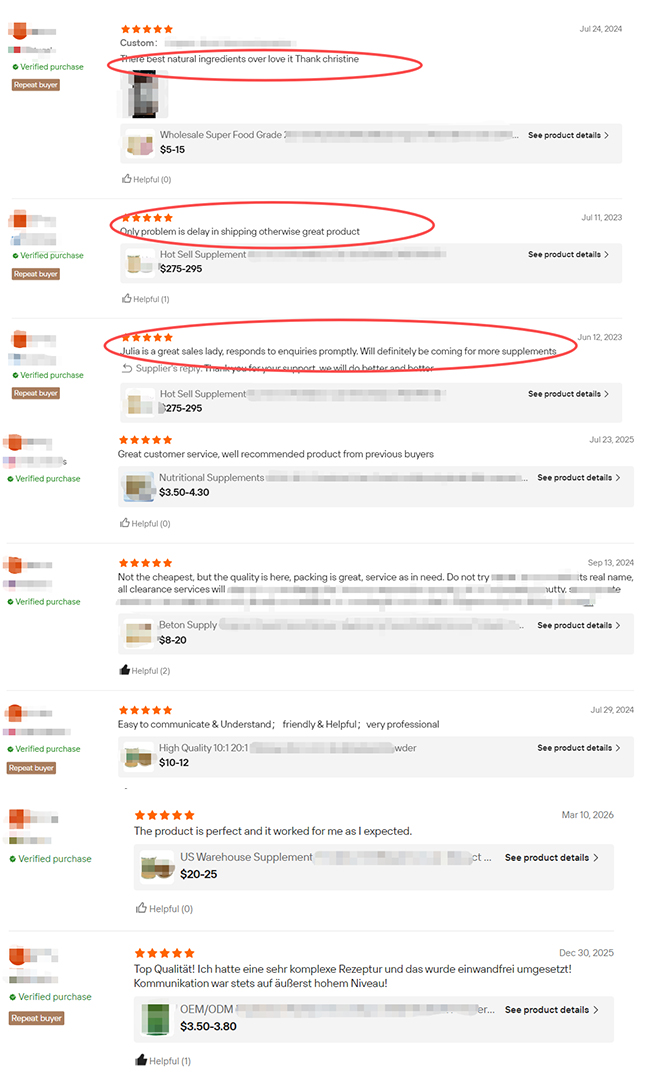
Customers' Feedback
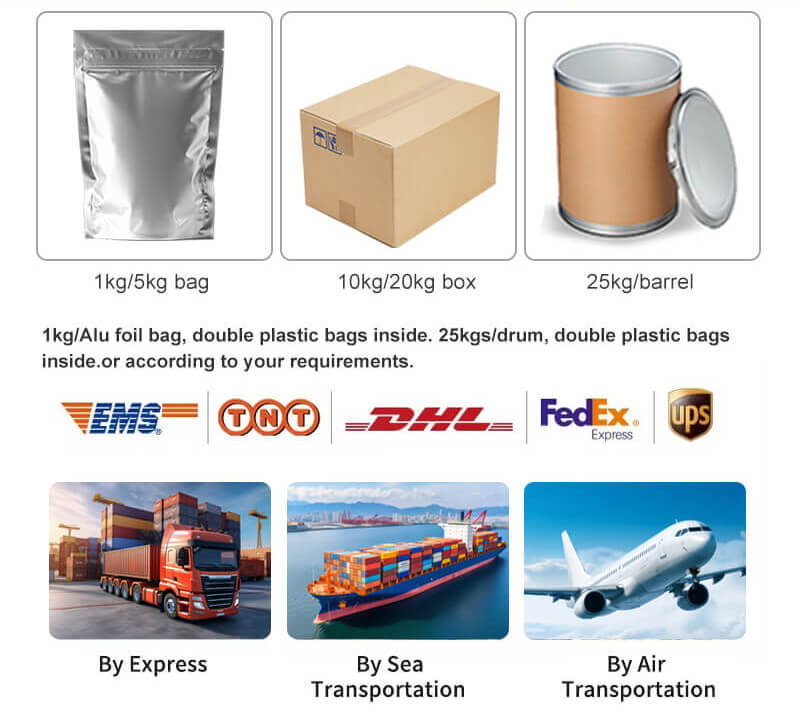
packing and shipping
Inquire Now!
If you have any needs, please feel free to contact me and I will be happy to serve you.