
 +86 13096987266

Quillaia Extract (Quillaja saponaria) 20% Saponins
Product Introduction
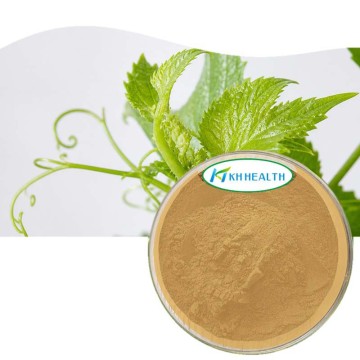
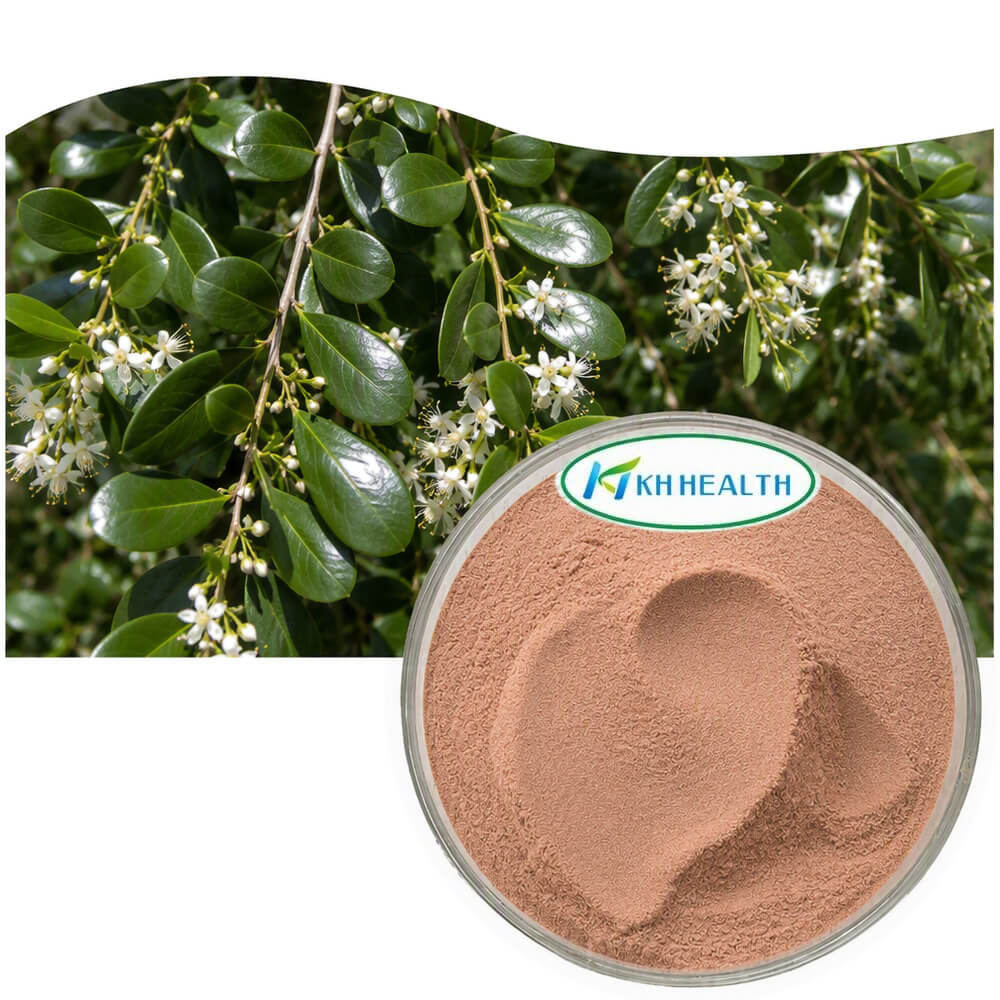
Quillaia extract 20% saponins is a spray-dried aqueous extract of the bark and pruned wood of Quillaja saponaria Molina (soapbark, quillay), standardized to a minimum 20% triterpenoid saponins on a dried basis.
We supply it as a light brown, pink-tinged, free-flowing powder for beverage foam and emulsion systems, sulfate-free personal care, feed premixes and agricultural adjuvant formulations — with the HPLC marker profile, foam performance data and contaminant limits a formulator needs to register the material in their own market.
Product benefits
Natural foaming agent: Generates rich, stable foam without synthetic surfactants; widely accepted clean-label alternative.
Natural emulsifier & surfactant: It reduces surface tension and helps blend oil-water phases in liquid formulations.
Immunostimulant adjuvant property: Saponin fraction acts as a vaccine adjuvant for veterinary formulations.
Antioxidant activity: Natural polyphenols and triterpenoids provide mild antioxidant function.
Clean label ingredient: Registered as food additive E999, approved by JECFA & EFSA, fits “plant-based, non-synthetic” marketing claims.
Good dispersibility: Fine powder dissolves easily in cold water, convenient for beverage & liquid formulation production.
Low irritation profile for cosmetic use: Natural surface-active ingredient for personal care cleansing formulations.
Product applications
1. Carbonated and flavoured beverages
Quillaia extract foam and emulsion in root beer, cream soda, slush and frozen carbonated drinks, cocktail mixers, beer and low-alcohol beverages.
2. Food supplements
E 999 was extended to food supplements in solid and liquid form (FC 17.1 and 17.2, excluding products for infants and young children) at 3,350 mg/kg expressed as saponins by Regulation (EU) 2025/2084. This is the newest authorized use and the one where the ADI arithmetic matters most.
3.Personal care and cosmetics
As INCI Quillaja Saponaria Bark Extract, this is a workhorse natural surfactant for sulfate-free shampoo, body wash, facial cleansers, micellar water, foam masks, baby bath and toothpaste.
4. Animal feed and premixes
Saponin-containing quillaia preparations are used in feed for their surfactant and ammonium-binding behaviour in premixes. The regulatory position in the EU is the thing to check first.
5. Agriculture and biopesticides
As a natural wetting agent, spreader and adjuvant in foliar sprays and tank mixes. Its role is to reduce surface tension so the active wets and adheres rather than running off. Note that this is a different regulatory file again — adjuvant claims and permitted uses are set nationally.
6. Veterinary and research adjuvants
Purified quillaia saponin fractions self-assemble with cholesterol and phospholipids into ISCOMs, nanoscale cage-like structures used as antigen-delivery adjuvants in veterinary vaccines (foot-and-mouth disease, PRRS, BRSV and others).
Why choose us?
Free sample support: 10–20g free samples for R&D formulation test, buyer covers freight.
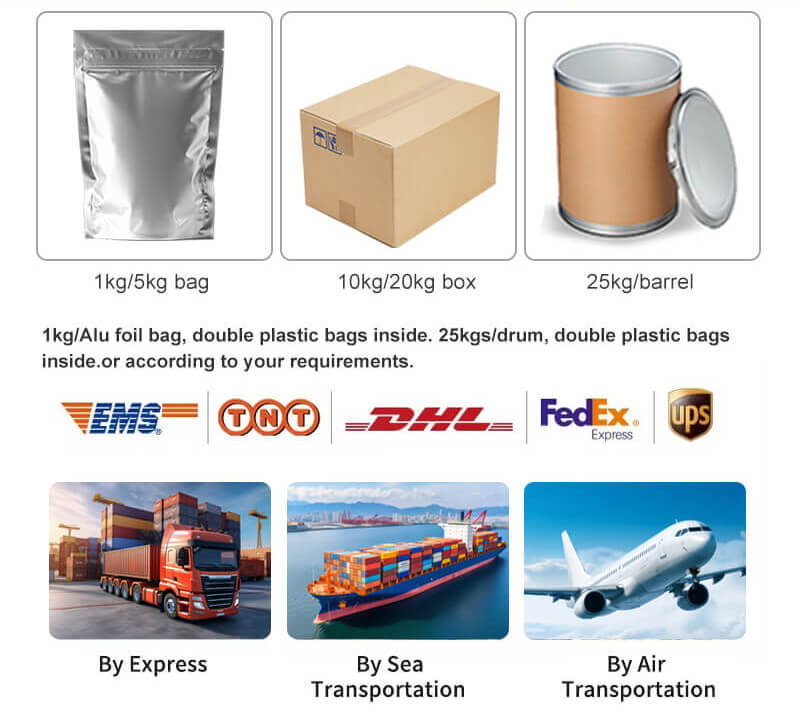
Customization service: Mesh size adjustment, moisture control, custom packing (25kg kraft drum / foil bag).
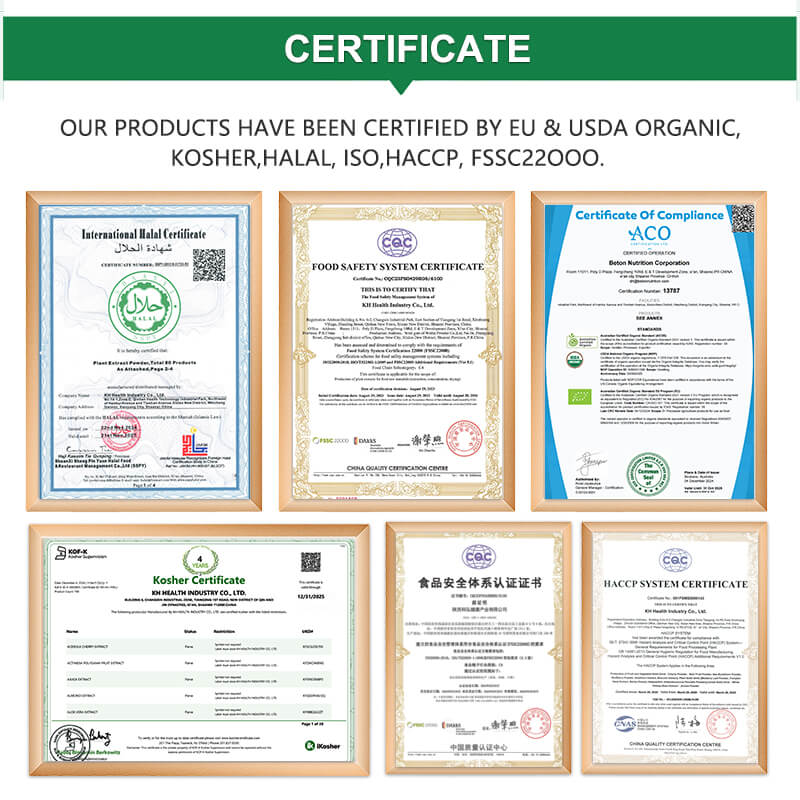
Full document package: COA, SDS, certification copies, specification sheet, traceability file for import registration.
Technical team support: Formulation suggestions, dosage guidance, regulatory documentation consultation for EU & US market.
Bulk stable supply: Factory direct production, monthly production capacity up to several tons, flexible MOQ.
Quality guarantee: Re-test support for quality disputes within shelf life.
Shipping options: FOB / CIF / DDP terms, export packaging fit sea & air shipment.
case study
Beverage manufacturer (EU): Replaced synthetic foamer with our Quillaia 20% saponins for low-sugar sparkling drink, passed E999 compliance audit, stable foam performance in shelf-life testing, monthly bulk order of 800–1200 kg.
European veterinary raw material supplier: Purchased for vaccine adjuvant intermediate, used our batch COA & heavy metal reports for registration documentation; repeat quarterly bulk shipment.
fAQ
Q1. Is 20% saponins a low grade? Should I be looking for 90%?
No — 20% is the regulated assay band for Quillaia extract Type 1 in the JECFA specifications and the assay floor in the EU specification for food additive E 999. A 90% material is Type 2: a different process, a different foam signature, a different price and a different typical inclusion rate. If your regulatory file names E 999, Type 1 is what you need; if you need high active surfactant matter in a personal-care formula, Type 2 is the right conversation. Neither is a discount version of the other.
Q2. Can you prove the material is Quillaja and not a cheaper saponin source?
Yes. The HPLC fingerprint with marker quantification establishes botanical identity, and we can arrange HPLC–QToF-MS molecular confirmation for first-lot verification, dispute resolution or periodic audit.
Q3. Is the powder water-soluble?
Very soluble in water; insoluble in ethanol, acetone, methanol and butanol, per the JECFA solubility test. In practice we recommend pre-dissolving as a 1–5% aqueous solution and screening out the calcium-oxalate insolubles. Do not plan an ethanol-based process step with this material.
Q4. What carrier is used, and does it affect my label?
This is not a detail: the carrier is part of your ingredient declaration, it changes your dose arithmetic, and some carriers bring their own allergen consequences — JECFA's monograph lists lactose, maltitol and maltodextrin as carriers used commercially for this extract, and a lactose carrier carries a milk-allergen declaration in most markets. We state the carrier and its proportion on the COA and the TDS.
Q5. Will it work in a sulfate-free shampoo?
Yes, as a foaming and cleansing support. Commercial guidance puts it at 0.5–3% as a supporting surfactant, 2–10% as a primary foaming cleanser and up to 15% in rinse-off systems, stable across pH 4.0–8.0, added to the aqueous phase.
Q6. Why is the powder bitter, and why is there sediment in my tank?
Both come from the material itself. The bitterness tracks the co-extracted polyphenols and tannins, which is why the specification caps tannins at 8% — manage it in the flavour system. The sediment is largely calcium oxalate, which is insoluble and is now limited to 6 g/kg saponins in the EU specification; screen or filter the pre-dissolution step and it stops being a problem in the finished product.
Q7. What documents arrive with the first order?
A lot-specific COA with actual results against every specification limit, the HPLC chromatogram with marker identification, the JECFA foam test result, the carrier identity and proportion, a TDS, an MSDS/SDS, a certificate of origin, and allergen and GMO statements. Pesticide residue reports, stability statements and FSC chain-of-custody documentation are available on request.
For any questions or assistance regarding bulk quillaia extract 20% saponins powder, feel free to contact us via:
Email: sales@kh-health.com
WeChat: +86 13096987266
WhatsApp: +86 18792880979
Customers' Feedback
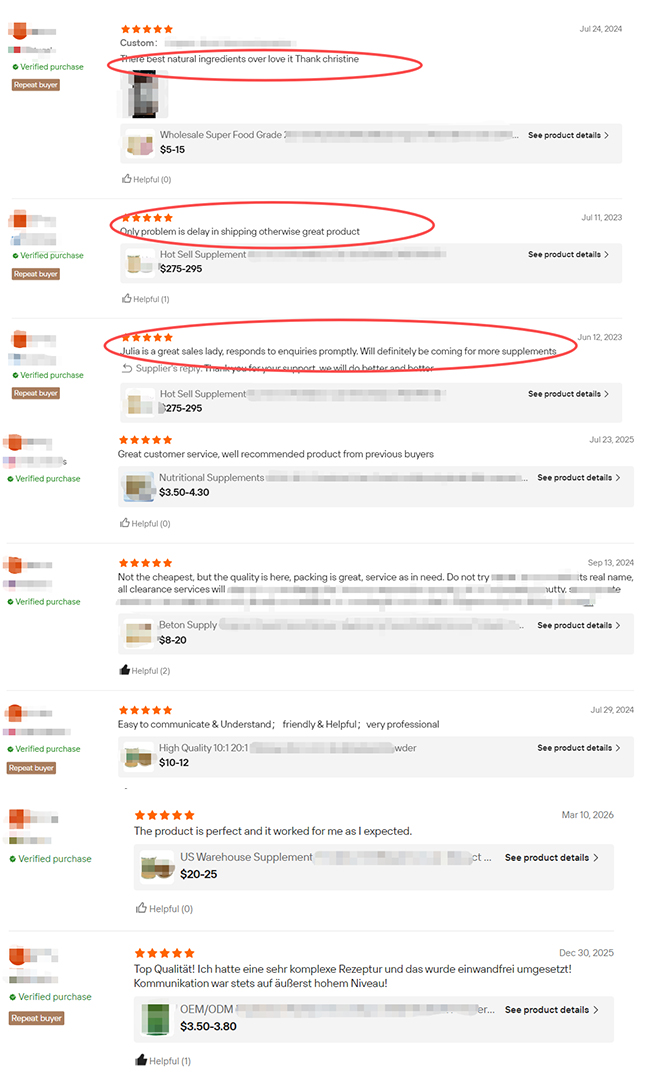
Customers' Feedback
Inquire Now!
If you have any needs, please feel free to contact me and I will be happy to serve you.