
 +86 13096987266

Olive Leaf Extract 80% Oleanolic Acid
Product Introduction
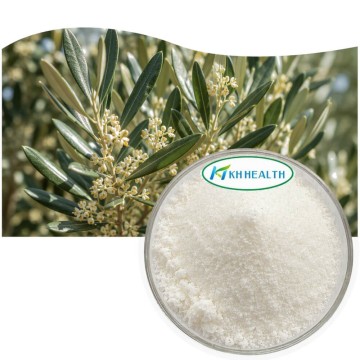
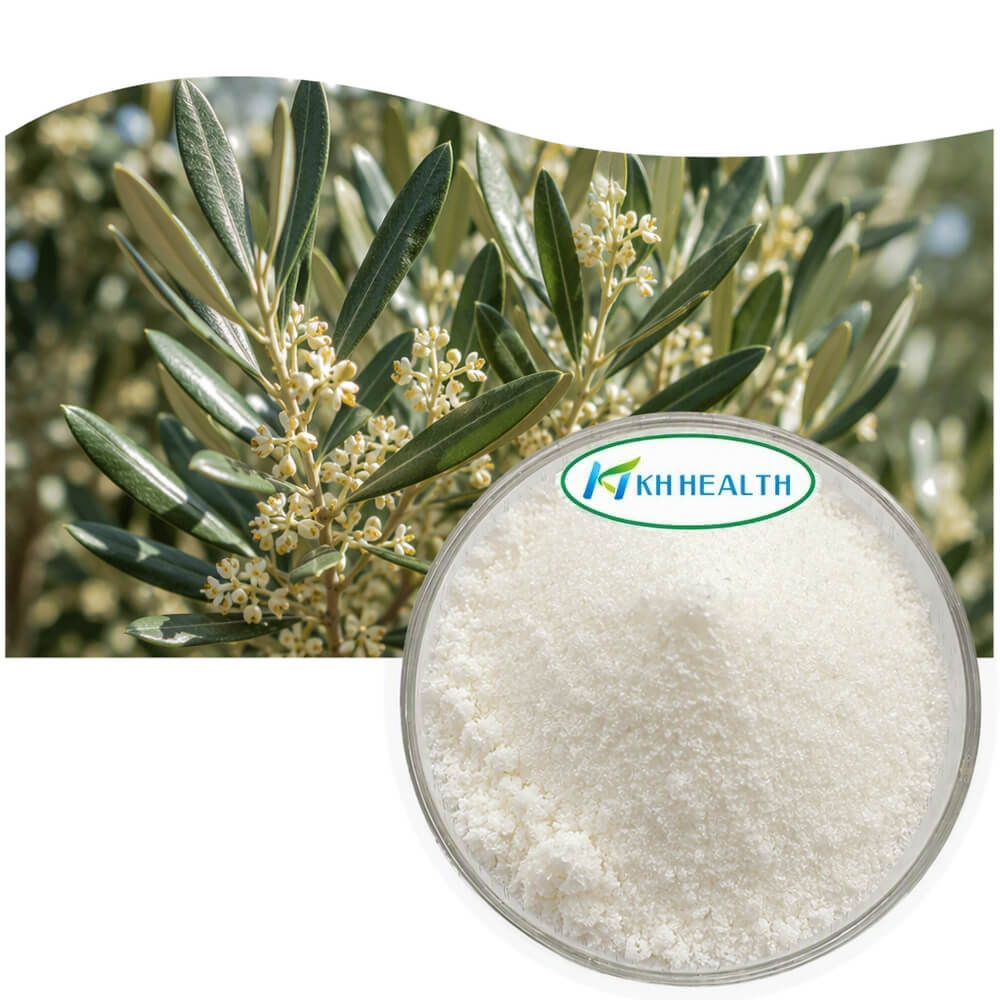
Olive leaf extract 80% oleanolic acid is the triterpene acid fraction of the olive leaf, isolated from the leaf's cuticular wax, purified by multi-stage crystallization, stripped of chlorophyll and tannin colour, and released by HPLC at a minimum of 80.0% oleanolic acid (CAS 508-02-1). It is a near-white crystalline powder with a defined melting point, a defined isomer profile and a defined solvent residue — a single, named molecule sitting on top of a specification, not a "broad-spectrum olive leaf" whose number moves with the harvest.
A fine, free-flowing, off-white to white crystalline powder with a clean, near-neutral odour, a melting point of 305–310 °C, and a solubility profile that reads ethanol, chloroform, hot ethanol — yes; water — no.
Product Process
Reaching a released 80.0% from leaf that carries oleanolic acid in the low single digits is a separation problem, not an extraction problem. It is solved in two halves: first, split the lipophilic triterpene away from the water-soluble chemistry, then separate oleanolic acid from its own structural isomers.
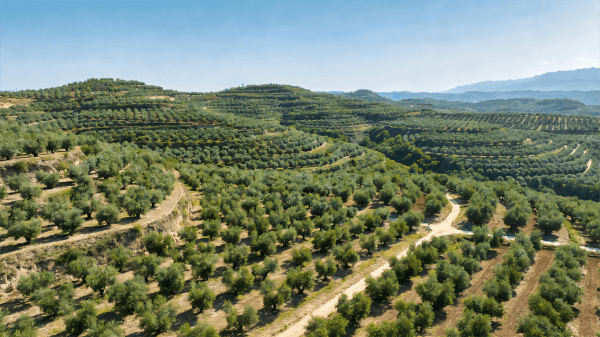
Olive Leaf (cuticular wax fraction)
│
▼
[1] Cuticular Wax Selective Triterpenoid Fractionation
→ lipophilic triterpene esters & free acids taken up; oleuropein and
hydroxytyrosol partitioned into the aqueous polar stream and recovered separately
│
▼
[2] Selective Hydrolysis / Saponification of Triterpenoid Esters
→ bound triterpenyl esters converted to free triterpenoid acids
│
▼
[3] Multi-Stage Organic Solvent Fractional Crystallization
→ oleanolic acid enriched; maslinic acid and ursolic acid pushed to mother liquor
│
▼
[4] Recrystallization & Isomer Polishing
→ ≥80.0% oleanolic acid by HPLC, baseline-resolved isomer peaks
│
▼
[5] Complete Decolorization — Chlorophyll & Tannin Stripping
→ off-white to white crystalline powder, neutral odour
│
▼
Low-Temperature Milling & Classifying (80–100 mesh)
Product benefits
1. Hepatoprotection, Liver Enzyme Balance and Anti-Fibrotic Pathways
Oleanolic acid is unusual among botanical triterpenes in having a long history of clinical pharmaceutical use as an oral hepatoprotective agent, and that history is the strongest commercial argument for putting it in a liver formula.
For a supplement developer, this is the mechanistic bridge that lets oleanolic acid sit credibly beside silymarin and artichoke extract in a hepatoprotective complex instead of being an also-ran antioxidant.
2. TGR5 Receptor Activation, GLP-1 Secretion and Glycemic Homeostasis
This is the most commercially live mechanism in the molecule and the one least understood by buyers who still file olive leaf under "antioxidant."
It is a documented agonist of TGR5 (GPBAR1), the G-protein-coupled bile acid receptor expressed on enteroendocrine L-cells, in brown adipose tissue and in immune cells.
Oleanolic acid does not replace a GLP-1 receptor agonist and must never be positioned as one — but as a metabolic co-factor in insulin sensitivity, post-prandial glucose and weight-management formulas, it has a mechanism that can be explained to a formulator and defended in a claim substantiation file.
3. 5-Alpha Reductase Inhibition, Sebum Regulation and Clear-Skin Defense
Triterpenoid acids of the oleanane and ursane type have been repeatedly shown in enzyme and cell models to inhibit 5α-reductase activity, and oleanolic acid additionally downregulates the NF-κB and TLR-mediated inflammatory response to Cutibacterium acnes.
That gives a clean-beauty formulator something genuinely rare: a plant-derived, non-comedogenic active with a named enzymatic target rather than a "purifying botanical blend." It supports oil-control positioning on the sebaceous side and redness/lesion positioning on the inflammatory side, and it does so without the irritation profile of retinoids or the photosensitivity of some acids — which is precisely why the 5α-reductase grade is specified for pharmacy-channel and sensitive-skin acne lines rather than mass market.
4. Anti-Inflammatory NF-κB Downregulation and Cellular Antioxidant Defense
It also modulates the NLRP3 inflammasome, which is the node connecting metabolic stress to interleukin-1β output. On the antioxidant side, it activates Nrf2/ARE and preserves mitochondrial membrane integrity under oxidative challenge, while directly scavenging peroxyl radicals in lipid phases — a useful property in an oil fill, where it protects the carrier oil as well as the tissue.
In a finished formula this is the "anti-inflammatory backbone" role: the ingredient that makes a stack of actives tolerable, and that gives an oil-phase product antioxidant protection without adding a synthetic tocopherol-only story.
5. Collagen Synthesis Stimulation and Anti-Photoaging Repair
In dermal fibroblast models, oleanolic acid upregulates type I and type III collagen synthesis through the TGF-β/Smad signalling axis and supports the fibroblast's matrix-producing phenotype. In parallel it suppresses UV-induced MMP-1 expression — the collagenase that does most of the damage in photoaging — and reduces the oxidative burst that follows UV exposure.
The result is the combination a premium anti-ageing brief actually asks for: more matrix built, less matrix destroyed. Add the Nrf2-driven antioxidant defence and you have an active that fits three product stories at once — firming, post-sun repair, and barrier support — without changing the ingredient on the label. It is also the reason oleanolic acid appears in the same finished line as a barrier cream and a daytime repair fluid: the mechanism is directionally the same, only the vehicle changes.
Compliance note: the above describes published mechanistic research. It is not a claim that this ingredient diagnoses, treats, cures, or prevents any disease. EU Regulation 1924/2006, FDA structure/function rules, TGA, and other regimes each restrict what may be said, and permitted wording differs.
Product Application
1.Hepatoprotective Liver Support Capsules and Softgels
As a flagship application, oleanolic acid offers a distinct triterpenoid mechanism (Nrf2 activation and fibrosis modulation). The decolorized, high-purity grade ensures a clean appearance in softgels and provides excellent flow and stability for hard capsules and tablets.
2.Metabolic Health, Insulin Sensitivity and Weight-Control Formulations
Leveraging the TGR5/GLP-1 pathway, this active complements insulin-signaling ingredients. The high-density, free-flowing powder prevents segregation in blends and maintains suspension stability in powder sachets.
3.Clean-Beauty Anti-Acne and Sebum-Control Serums
Ideal for sebum control via 5α-reductase inhibition. This grade meets strict cosmetic requirements: zero green pigment, no recrystallization grit, and full compatibility with lipid phases for clear gels and serums.
4.Anti-Ageing, Collagen-Boosting and Post-Sun Repair Creams
Delivers collagen synthesis, MMP-1 suppression, and antioxidant defense in one INCI line. Its low-odor, off-white profile is critical for premium eye and neck creams, while also acting as a lipid-phase antioxidant to simplify ingredient lists.
5.Oral Health Toothpastes and Gum Health Gels
Effectively inhibits S. mutans biofilm and gingival inflammation. Unlike standard olive leaf extracts, this grade lacks bitter secoiridoids, making it palatable for toothpastes and easy to solubilize in aqueous systems.
case study
North American Premium Liver-Support Supplement Brand:
A North American supplement brand had built a hepatoprotective softgel around "olive leaf extract" and was losing money on it in three directions at once. The oleanolic acid content of the incoming material swung between roughly 40% and 65% because it was really a polyphenol-grade extract with a triterpene footnote, so every batch required a fresh overage calculation. The powder was dark green with black specks, which showed through the translucent gelatin shell as a muddy, inconsistent capsule that retail buyers flagged in line reviews. Worst of all, in the oil fill the coarse triterpene settled into a dense layer within days, and the resulting fill heterogeneity was compounded by a shell problem: the sediment layer sat against the gelatin, drew moisture unevenly, and drove softgel leakage to 5.8% — a defect rate that no contract manufacturer will tolerate and no brand can absorb.
We replaced the polyphenol-grade material with the decolorized 80% oleanolic acid crystalline grade, and worked the change through the customer's softgel line rather than simply shipping a drum. Three adjustments were made: the crystal was specified at 80–100 mesh to slow settling and improve suspension rheology; the fill was built on a medium-chain triglyceride plus soy lecithin system with a small amount of beeswax to yield a thixotropic suspension that holds particles in place; and the addition sequence was changed to a hot-oil dispersion at 70–75 °C with high-shear for eight minutes before cooling to fill temperature, so the crystal went into suspension fully wetted and never agglomerated.
The oil phase now runs as a uniform, opaque, free-flowing suspension with no visible sediment layer after twelve weeks at 40 °C, and fill weight uniformity tightened to within ±2%. Leakage fell from 5.8% to 0.02% — a 290-fold reduction — because the shell no longer sat against a moisture-drawing sediment cake. The capsule presents as a clean, uniformly pale fill rather than a speckled green one, which is what made the retail conversation possible: the brand entered national US health-food and pharmacy chains in the following season and moved to an annual purchase volume of 5 tonnes of the 80% grade, on a single fixed specification. The lesson is worth restating: the leakage was never a gelatin problem. It was a powder problem.
Why Choose us?
KH Health has been devoted to natural products for over 15 years. As a leading supplier of raw materials for food and health products, we are dedicated to providing the highest quality ingredients to customers worldwide.
Technical Expertise: With over 15 years in plant extract R&D, our team offers reliable technical support and customized formulation advice.
Global Supply Chain: We proudly serve clients in over 80 countries with efficient logistics and export experience.
Customer-Centric Solutions: From small R&D samples to large commercial orders, we offer flexible MOQs and OEM/private labeling services.
Commitment to Innovation & Integrity: We focus on providing safe, effective, and cost-effective ingredient solutions, fostering long-term partnerships based on trust.
Multilingual Team: We have a team of people who help with trade and answer technical questions. This multilingual team is available to help clients 24 hours a day. The multilingual team can speak languages, including English, German, and Japanese. This helps us talk to clients from countries and understand what they want from our trade shows and communication services.
FAQ
Q: How does 80% oleanolic acid differ from standard olive leaf extract (oleuropein/hydroxytyrosol)?
A: They are distinct molecules for different applications. Oleanolic acid is a lipophilic triterpenoid (CAS 508-02-1) ideal for oil fills, softgels, and lipid-phase formulations. Oleuropein and hydroxytyrosol are water-soluble polyphenols suited for aqueous antioxidant products.
Q: How do you distinguish it from ursolic acid?
A: We use a validated chromatographic method ensuring baseline resolution (≥ 1.5) between the two isomers, confirmed by ELSD/CAD. Every lot includes a resolved chromatogram, a detailed impurity table, and a sharp melting point (305–310 °C) to verify purity.
Q: How can it be formulated into aqueous products?
A: Since it is insoluble in water, it must be solubilized (e.g., using glycol-esters or polysorbates), suspended (microemulsion), or encapsulated (spray-dried/liposomal for beverages). Adding dry powder directly to water will not work.
Q: What is your residual solvent status?
A: We use only Class 3 solvents (ethanol and ethyl acetate), with residues typically < 500 ppm. No Class 1 solvents (e.g., hexane, benzene) are used. Full GC-FID reports and solvent declarations are provided with every lot.
Q: Will the powder discolor my product?
A: No. The grade is decolorized to off-white to prevent yellowing or greying in creams and softgels. We recommend stability testing (40 °C/freeze-thaw) for high-inclusion formulas, but the material is specifically polished to ensure color stability.
Q: Is the material irradiated or ETO-treated?
A: No. We use physical sanitization only (controlled drying and hygienic milling). Every shipment includes a signed non-irradiation and ETO-free statement to meet strict EU and premium market standards.
Q: What are the MOQ and lead times?
A: Evaluation samples (50–200 g) ship within 48 hours. Standard stock (MOQ 25 kg) dispatches in 3–5 days; custom specifications (100–500 kg) take 10–15 days. Buffer stock is available for forecast-based programs.
Q: Do you support regulatory filings and audits?
A: Yes. We provide comprehensive documentation, including lot-specific chromatograms, heavy metal/pesticide reports, ISO/cGMP certificates, and third-party verification (SGS/Eurofins). We also support customer audits and technical questionnaires.
For any questions or assistance regarding high-quality olive leaf extract 80% oleanolic acid powder, feel free to contact us via:
Email: sales@kh-health.com
WeChat: +86 13096987266
WhatsApp: +86 18792880979
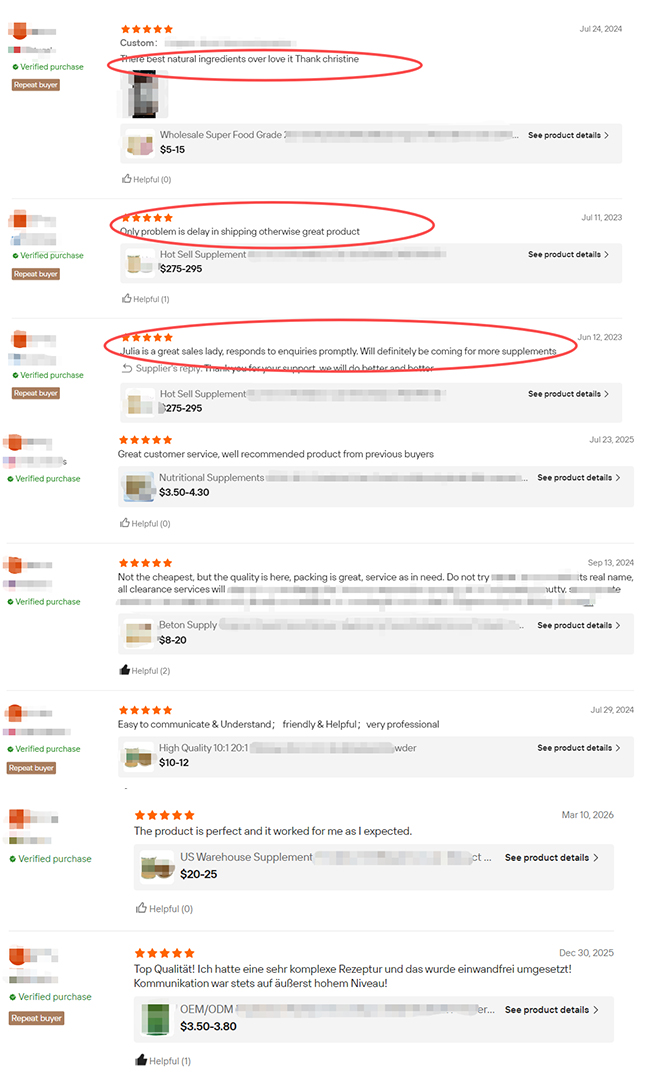
Customers' Feedback
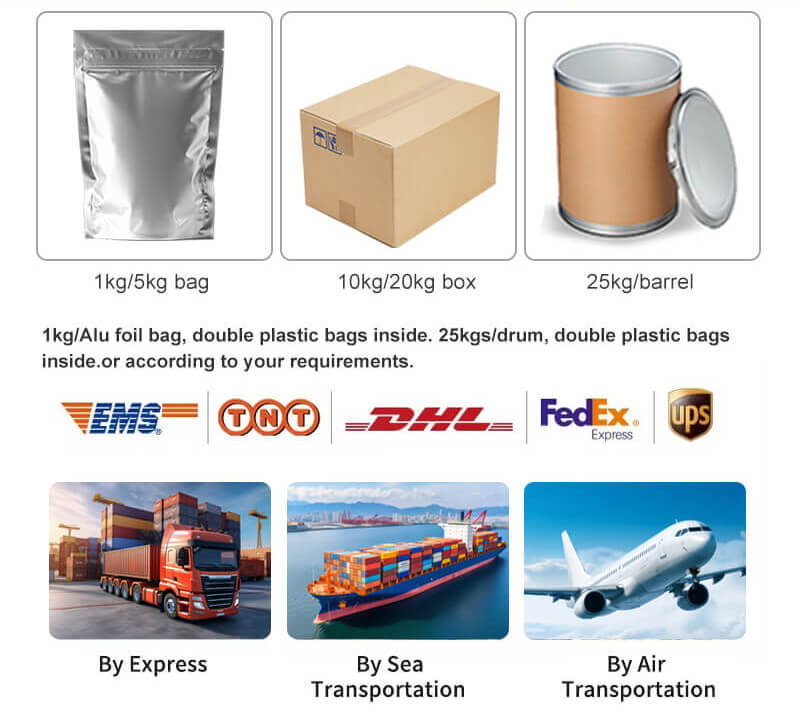
packing and shipping
Inquire Now!
If you have any needs, please feel free to contact me and I will be happy to serve you.