
 +86 13096987266


Sialic Acid (NANA) Supplier Guide: How to Vet a Bulk Manufacturer
2026-10-16
Sialic acid is one of the few ingredients I supply where almost no consumer looks up the name. The buyers who ask about it are infant-nutrition formulators, supplement developers with a brain or immunity story, and cosmetic R&D teams — and they ask the same thing: how do I tell a real manufacturer from a repackager with a nice-looking specification sheet?
 The honest answer is that sialic acid is unusually hard to vet, because the market contains two completely different supply routes, a public price spread that runs into an order of magnitude, and a regulatory file that changes market by market. What follows is the checklist I would use, and where possible I have anchored each requirement to a published authority rather than to my own preference.
Start With Identity: What "Sialic Acid 98%" Actually Specifies
"Sialic acid" is a family name. The commercially traded member is N-acetylneuraminic acid, also written NANA or Neu5Ac, and it is the predominant sialic acid in mammalian tissue and human milk. A specification that says only "sialic acid 98%" leaves two important questions open.
The acid or the dihydrate?
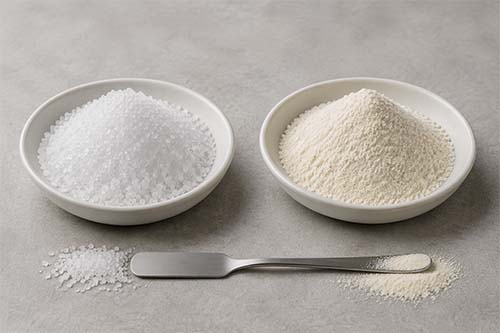
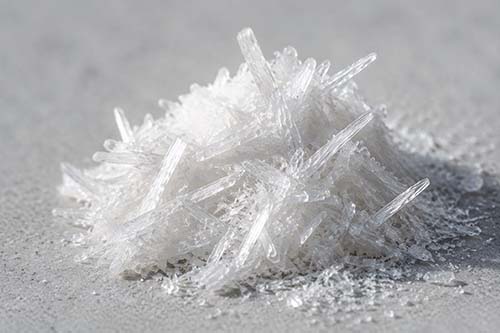
The EU authorisation for this ingredient specifies the dihydrate, and the difference is not cosmetic. Per Annex I of Commission Implementing Decision (EU) 2017/2375, the free acid has the formula C11H19NO9 and a molecular mass of 309.3 Da, while the dihydrate is C11H23NO11 at 345.3 Da, with CAS numbers 131-48-6 for the free acid and 50795-27-2 for the dihydrate. The same annex sets water at ≤ 12.5% w/w, noting that the dihydrate calculates to 10.4%. In other words, a large part of the mass in a dihydrate product is water of crystallisation — so an assay quoted without stating which form it refers to is not a comparable figure.
The five identity fields to demand
| Field | What it prevents |
|---|---|
| Full chemical name plus synonym | A "sialic acid" label that hides which member of the family you are buying |
| CAS number (and the form it belongs to) | Confusion between the free acid (131-48-6) and the dihydrate (50795-27-2) |
| Molecular formula and mass | Assay figures quoted on an unstated basis |
| Assay method and basis | A number that cannot be reproduced in your own lab |
| Water content | Buying water of crystallisation at active-ingredient prices |
The Two Supply Routes — and What Each One Means for You
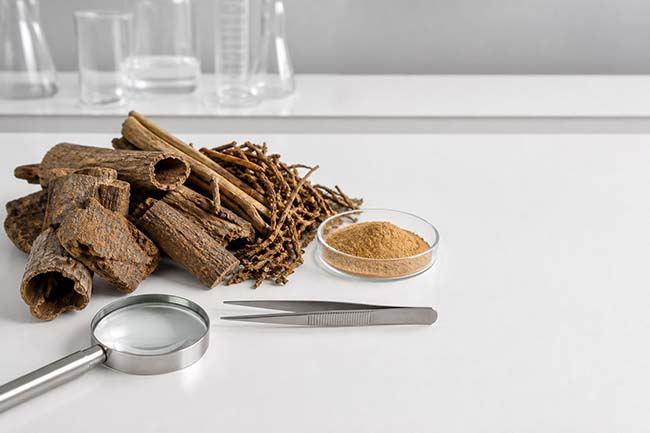
Extraction from edible bird's nest
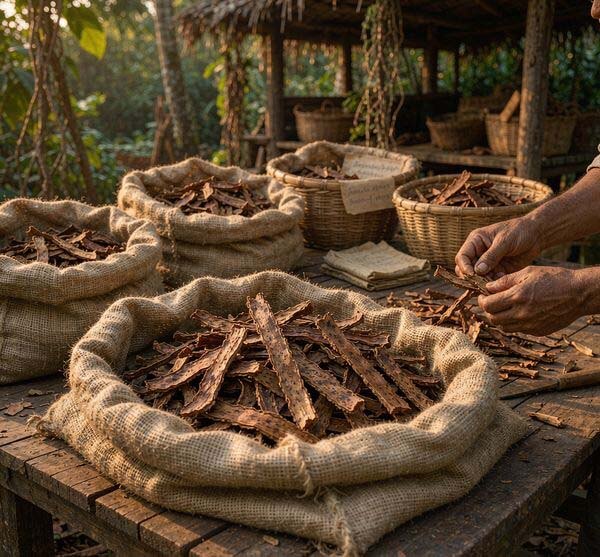
Bird's nest is the best-known natural source, and a patent on extraction from nests states a sialic acid content of up to 100 g/kg in the raw material (CN104072544A). That headline number is also the problem: the raw material is among the most expensive animal products in the world, and a 2025 paper in Applied Sciences developing a NANA reference material notes that NANA is primarily extracted from bird's nest by a route it describes as costly and difficult to scale up. Buyers should read "bird's nest derived" as a marketing asset and a cost driver at the same time.
Microbial fermentation
The scalable route is fermentation. A 2025 review of microbial NANA production states plainly that conventional preparation methods extract and purify Neu5Ac from natural raw materials such as milk, edible bird's nests and egg yolks — and then positions fermentation as the alternative. In China, several N-acetylneuraminic acid new-food-raw-material applications have been closed on the basis of substantial equivalence with the already-announced material, including one filed in 2025 that uses glucose as feedstock through microbial fermentation and multi-step purification (CIRS Group; National Health Commission filing records). That is a useful signal: when a regulator accepts an equivalence argument, the production route and the resulting impurity profile are the substance of the review.
| Route | Feedstock | What to ask for |
|---|---|---|
| Bird's nest extraction | Edible bird's nest | Species and origin of nests; nitrite and protein residue data; cost and supply continuity |
| Microbial fermentation | Glucose or similar carbon source | Strain identity and feedstock declaration; residual solvents and proteins; vegan and halal suitability statement |
The Specification Benchmark Already Exists in EU Law
Most ingredient categories force you to invent a specification. Here, you do not have to. Annex I of Decision (EU) 2017/2375 sets the authorised specification for N-acetyl-D-neuraminic acid (dihydrate), and it is a perfectly reasonable floor for a bulk purchase request:
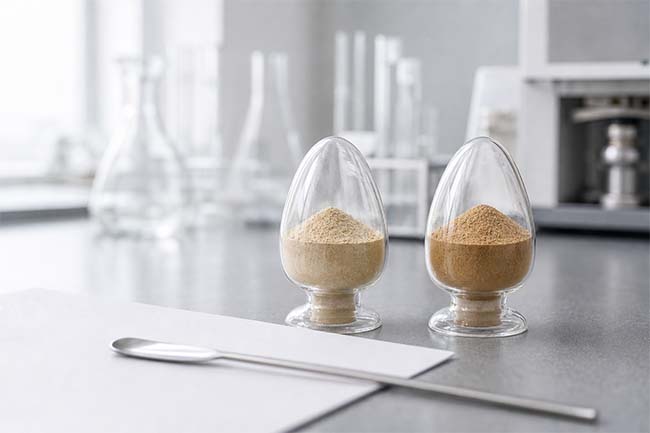
Appearance: white to off-white crystalline powder
pH (20 °C, 5% solution): 1.7 – 2.5
Assay (dihydrate): > 97.0%
Water: ≤ 12.5% w/w; sulfated ash: < 0.2% w/w; acetic acid: < 0.5% w/w
Iron: < 20.0 mg/kg; lead: < 0.1 mg/kg; residual proteins < 0.01% w/w
Residual solvents (2-propanol, acetone, ethyl acetate): each < 0.1% w/w
Residual endotoxins: < 10 EU/mg
Microbiology: Salmonella absent in 25 g; aerobic mesophilic total count < 500 CFU/g; Enterobacteriaceae absent in 10 g; Cronobacter sakazakii absent in 10 g; Listeria monocytogenes absent in 25 g; Bacillus cereus < 50 CFU/g; yeasts < 10 CFU/g; moulds < 10 CFU/g
Two of these deserve emphasis in a supplier conversation. The Cronobacter sakazakii line exists because this ingredient goes into infant formula, where that organism is the specific hazard regulators worry about. And the endotoxin limit is the difference between a material sold for food use and one that can be discussed for pharmaceutical use — if a supplier markets pharmaceutical grade without endotoxin data, you are being sold a grade name rather than a grade.
The Regulatory File Changes by Market
European Union
N-acetyl-D-neuraminic acid is authorised as a novel food ingredient by Commission Implementing Decision (EU) 2017/2375, following the EFSA opinion of 28 June 2017 (EFSA Journal 2017;15(7):4918). The authorisation is use-specific. Annex II sets maximum levels by food category, for example 0.05 g/L in reconstituted infant and follow-on formula, 0.5 g/kg in cereal bars and 0.2 g/kg in speciality infusions. For food supplements the limits are age-banded: 300 mg/day for the general population over 10 years, 250 mg/day for children aged 3 to 10, 130 mg/day for young children and 55 mg/day for infants.
The labelling obligation matters to your artwork. Article 2 requires supplements containing the ingredient to carry a statement that the product should not be given to infants, young children and children under 10 years of age who consume breast milk or other foods with added N-acetyl-D-neuraminic acid within the same 24-hour period — the decision also references a combined-exposure ceiling of 11 mg/kg body weight for that group.
China
N-acetylneuraminic acid has been approved domestically as a new food raw material, and the route matters to the file: subsequent applications have been terminated on substantial-equivalence grounds rather than assessed afresh. Separately, a N-acetylneuraminic acid raw material completed cosmetic new-ingredient filing in May 2025 (filing number 国妆原备字20250052, as reported by trade compliance press). If you sell in both categories, expect to need both a food and a cosmetic file.
United States
Confirm the GRAS or New Dietary Ingredient position for your intended use and dose rather than assuming that a European novel-food authorisation travels. This is a per-market exercise, and it is the single most common gap I see in supplier document packs.
What Drives the Price
Published reference points vary widely, which is itself the buyer's problem. A public B2B marketplace listing for 99% bird's-nest-derived material shows USD 270–320 per kilogram, while a university technology-transfer listing puts sialic acid at USD 500–5,000 per kilogram depending on purity. I am quoting these as third-party public reference points, not as our price, and you should treat them as evidence of spread rather than as a benchmark to negotiate against.
The spread comes from four things: route (bird's nest extraction versus fermentation), purity and grade, the documentation package that accompanies the lot, and analytical reliability — the 2025 Applied Sciences paper that motivated a new reference material states directly that the absence of suitable reference materials makes it challenging to ensure the quality of NANA-containing products. That is a supplier-quality signal, not a laboratory curiosity: if your supplier cannot tell you how their assay is calibrated, their 98% figure has an unstated uncertainty attached to it.
The Vet Checklist
Specification sheet with the five identity fields, including the acid-versus-dihydrate statement
Batch-level COA with the assay method named, not just the result
Residual solvents, residual proteins and endotoxin data
Heavy metals including iron and lead, to the limits above
Full microbiological panel, with Cronobacter sakazakii included if infant nutrition is the target
Source and route declaration, with the allergen and vegan/halal implications stated
Certification set: ISO 22000 or FSSC 22000, HACCP, GMP where relevant, halal, kosher, non-GMO if claimed
Regulatory file per market, with the applicant or equivalence basis identified
Stability data, packaging specification (commonly 25 kg drums in published supplier specifications) and storage conditions
Retain sample policy and willingness to support third-party retesting on receipt
Red flags: a purity figure with no stated form or method; no source declaration; no microbiological panel; "pharmaceutical grade" without endotoxin data; a price far below the published spread with no documentation to explain it; and a supplier who cannot describe their own production route.
Frequently Asked Questions
Is sialic acid the same as NANA?
Sialic acid is the family; N-acetylneuraminic acid — NANA or Neu5Ac — is the member that is commercially traded. Per the EU specification, the authorised material is the dihydrate, with the free acid and dihydrate carrying different CAS numbers and molecular masses. Your specification should name the exact form.
Does the source route matter if the purity is the same?
Yes, for three reasons: price, documentation and positioning. Bird's nest extraction carries a premium raw material and is described in the 2025 Applied Sciences paper as costly and difficult to scale up; fermentation offers scale and a cleaner vegan and halal story but requires its own strain, feedstock and residue documentation.
What purity should I require for a supplement application?
Use the EU authorised specification as your floor: assay above 97.0% on the dihydrate, water at or below 12.5%, lead below 0.1 mg/kg, and the full microbiological panel. Then add whatever your own market and dosage form require on top.
What should I expect on MOQ and lead time?
Published supplier specifications commonly show minimum orders from 1 kg for samples and packaging in 25 kg drums, with stock positions quoted in the low tonnes. Treat those as market conventions rather than commitments and ask for your supplier's per-SKU minimum, current stock position, sampling policy and lead time in writing before you plan production.
References
European Commission. Commission Implementing Decision (EU) 2017/2375 of 15 December 2017 authorising the placing on the market of N-acetyl-D-neuraminic acid as a novel food ingredient — Annex I specification and Annex II authorised uses. Official Journal of the European Union L 337/63.
EFSA Panel on Dietetic Products, Nutrition and Allergies. Scientific Opinion on the safety of N-acetyl-D-neuraminic acid as a novel food. EFSA Journal 2017;15(7):4918.
Lan T, Chen X, Yuan L, et al. Development of N-Acetylneuraminic Acid Reference Material from Fermentation Products. Applied Sciences 2025;15(3):1601.
Microbial production of N-acetylneuraminic acid — review of conventional extraction sources and fermentative routes. PMC 2025.
Chinese patent CN104072544A. Method for extracting sialic acid from bird's nests — stated sialic acid content of bird's nest up to 100 g/kg.
CIRS Group. New food raw material filings and terminated reviews, including N-acetylneuraminic acid. July 2025.
Trade compliance press report on the 2025 cosmetic new-ingredient filing for N-acetylneuraminic acid (filing number 国妆原备字20250052). May 2025.
Universiti Kebangsaan Malaysia Centre for Advancement of Commercialisation and Entrepreneurship. Recovery of high-purity sialic acid from edible bird's nest processing by-products — published value range of USD 500–5,000 per kg depending on purity.
Hui Ding 16 years in botanical extraction
Scientifically reviewed by the :KH Health Quality Assurance Team (ISO-certified facility)
Published: January 15, 2026 · Updated: August 28, 2026