
 +86 13096987266



Liposomal NAD+ vs NR vs NMN: Which Precursor for Your Anti-Aging Formula?
2026-09-18
For more than fifteen years, my colleagues and I at betonnutrition have supplied standardized botanical and fermentation-derived actives to supplement brands, food companies, and cosmetics houses in over 50 countries. When a customer tells me they are building a longevity SKU, the conversation nearly always reaches the same fork: liposomal NAD+, or one of the two best-known precursors, nicotinamide riboside (NR) and nicotinamide mononucleotide (NMN)?
Buyers usually frame this as "which one is stronger." The useful question is which molecule fits your formula, your chosen market, and your cost target — three constraints that pull in different directions.
Three Molecules, Three Different Routes to the Same Coenzyme
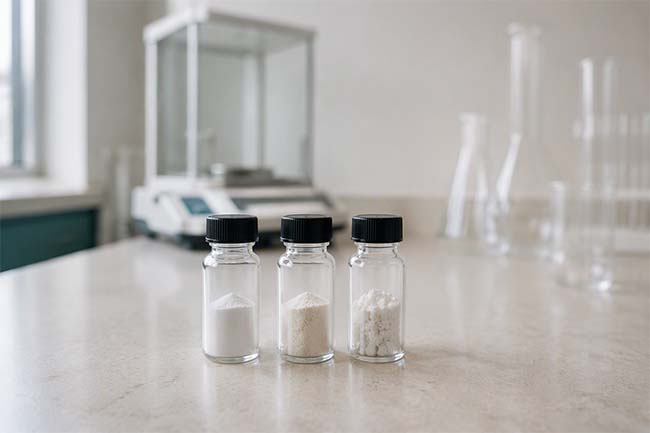
NAD+ is a coenzyme present in every cell, where it carries electrons in energy metabolism and acts as a substrate for DNA-repair enzymes. Its decline with age is the commercial premise of this whole category. Beyond that shared endpoint, the three ingredients are not interchangeable.
| Attribute | NAD+ | NMN | NR |
|---|---|---|---|
| Full name | β-Nicotinamide adenine dinucleotide | β-Nicotinamide mononucleotide | Nicotinamide riboside (chloride salt) |
| CAS / molecular weight | 53-84-9 · ≈663.43 g/mol | 1094-61-7 · 334.22 g/mol | Food-grade chloride salt · ≈290.70 g/mol |
| Role | The finished coenzyme | One step away; carries a phosphate group | Dephosphorylated precursor |
| Cell entry | Large and charged; depends on formulation | Must convert to NR before crossing the membrane | Enters directly via nucleoside transporters |
| Human research doses | Studied mainly as intravenous therapy | 250–1,200 mg/day | 300–1,200 mg/day |
| EU position, 2026 | No authorised EFSA health claims | Novel Food authorisation required | Authorised up to 300 mg/day |
NAD+ is the destination, not the vehicle
You cannot supplement the coenzyme itself meaningfully by mouth. NAD+ is roughly twice the molecular weight of NMN, it is charged, and it is poorly absorbed intact — which is why clinical NAD+ has always been delivered by infusion. Its value in a capsule or stick pack comes entirely from formulation engineering, and that is the job liposomal technology performs. It is also why "liposomal NAD+" exists as a product category rather than a marketing variant of plain powder.
NMN carries a phosphate group that membranes resist
NMN sits one enzymatic step from NAD+, hence the "direct precursor" claim. The catch is a phosphate group: membranes are largely impermeable to charged, phosphorylated molecules, so NMN must first be dephosphorylated to NR before it can enter a cell. A mouse intestinal transporter has been proposed as a direct route, but it has not been replicated in humans. Our own β-NMN is a fermentation-derived, 99% HPLC-grade powder (C11H15N2O8P, 334.221 g/mol), packed in 10 kg or 20 kg drums.
NR enters through a different door
NR is NMN minus that phosphate group, and the difference matters. NR is taken up by equilibrative nucleoside transporters, the same proteins that move natural nucleosides across membranes, so it needs no prior conversion. NR also appears to inhibit CD38 — the enzyme that becomes more active with age and consumes NAD+ — while NMN does not, and NMN is itself degraded by CD38. In short: NMN must be converted to enter, while NR both enters directly and may slow NAD+ breakdown.
What the 2026 Human Data Actually Changed
Until this year, the NR-versus-NMN debate rested on animal work and single-arm trials that could not compare the two molecules directly. Two 2026 studies changed the quality of the evidence.
The Norwegian crossover: a 2.3-fold difference
A randomized crossover pharmacokinetic trial by Berven and colleagues, published in iScience, gave six healthy adults 1,200 mg/day of NR or NMN for eight days, then repeated the protocol with the other compound after a washout. NR raised whole-blood NAD+ from roughly 27 µM to 70.5 µM — a 161% increase. NMN raised it from about 32 µM to 53.7 µM, a 69% increase. Head to head, NR produced about 2.3 times the NAD+ increase at the same gram dose, and the advantage held after the researchers corrected for molecular weight. The same group then dosed NR for four weeks and measured, for one of the first times in humans, a rise in brain NAD+ by 31P magnetic resonance spectroscopy.
The Nestlé trial found "comparable" — with caveats
A parallel-group trial by Christen and colleagues at Nestlé Research, published in Nature Metabolism, randomized 65 healthy adults to NR (1,000 mg/day), NMN (1,000 mg/day), nicotinamide (500 mg/day), or placebo for 14 days. NR raised whole-blood NAD+ by 49.4 µM and NMN by 43.1 µM — the same direction as the Norwegian result, though not statistically significant, and the authors described the two as comparable. The design explains the difference in interpretation: a parallel-group study spreads large between-person variability across arms (the Norwegian authors found individual response accounted for over 64% of total variance), participants were younger, dosing was lower, and no molecular-weight correction was applied.
What neither study settles
Both trials were small and open-label, and neither dosed the compounds in molecular equivalents as a primary design feature. In the crossover study NMN was dosed for only eight days, and its NAD+ peak arrived after supplementation ended. The honest summary for a formulator is: both precursors reliably raise NAD+ in humans, and current evidence favours NR on potency — but the gap is too small to carry a label claim, and it should not be your only selection criterion.
Why Liposomal NAD+ Still Belongs in a Premium Formula
The absorption problem is real
Every oral NAD+ precursor runs the same gauntlet: stomach acid, intestinal nucleoside breakdown, and first-pass metabolism. For NAD+ the barrier is higher still, because the intact coenzyme must survive digestion to be useful. That is why brands working with plain NAD+ powder often pay for a molecule that largely fails to arrive.
What liposomal encapsulation changes
Liposomes are phospholipid vesicles that encapsulate an active and carry it through the digestive environment, improving the bioavailability of compounds that are poorly soluble, poorly permeable, or easily degraded. Published market benchmarks look like this: liposomal NAD+ powders are supplied at 50–70% NAD+ content with a phospholipid carrier, typically non-GMO sunflower lecithin; one ingredient brand reports an average particle diameter of 29 nm and a clinical bioavailability increase of about 1.5 times; a European supplier publishes a working capsule formula of 100 mg NAD+ with 157 mg D-ribose and 43 mg of liposomal blend. Those are the numbers I ask suppliers to substantiate with batch data, not a marketing slide.
Where it fits in your portfolio
Liposomal NAD+ earns its place when positioning is premium and the format is demanding: softgels, liquid stick packs, functional beverages, or practitioner lines whose consumers already understand intravenous NAD+. For a mainstream capsule at a mass-market price, a bulk precursor powder will usually deliver more milligrams per dollar. For brands competing on cellular-energy science, the delivery system is the differentiator — and the market is moving that way: the global NAD+ products market was valued at USD 3.9 billion in 2025 and is forecast to reach USD 12.2 billion by 2033, with topical formats growing fastest.
A Buyer's Decision Framework
| Your situation | Recommended route | Why |
|---|---|---|
| US market, mainstream capsule, tight cost per serving | NMN or nr bulk powder | Both are established, well-documented, with broad human data |
| EU market, fastest legal path to shelf | NR chloride | Authorised as a novel food in supplements up to 300 mg/day |
| Premium longevity line, softgel or stick pack | Liposomal NAD+ powder | Protects the active and supports a defensible positioning |
| EU market with NMN in the formula | Reformulate, or wait for authorisation | NMN requires Novel Food approval before marketing |
Specifications to Demand Before You Order
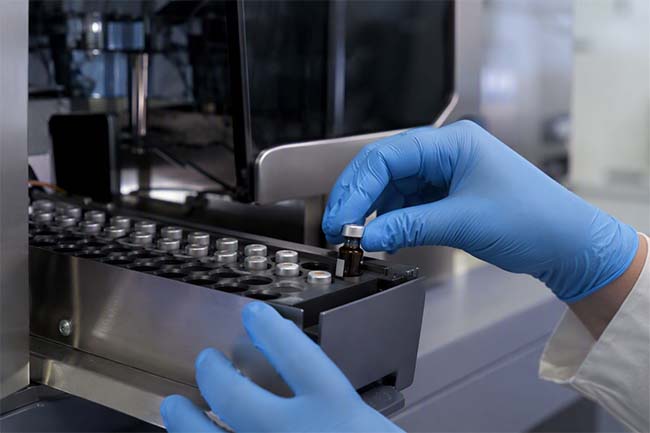
When you request a quotation for liposomal NAD+ or any NAD+ precursor, ask for these on the specification sheet — batch-level values, not a generic "complies":
- Assay — HPLC purity, plus the declared NAD+ content percentage for liposomal grades (50% and 70% are common commercial strengths)
- Particle size distribution and PDI — average diameter and polydispersity index, measured per batch, normally by light scattering
- Encapsulation efficiency — how much of the active is genuinely inside the vesicles
- Carrier identity — sunflower or soy lecithin, with a non-GMO statement; soy-free options matter for allergen-sensitive labels
- Heavy metals and microbiology — ICP-MS values and microbial limits with the test methods named
- Moisture, bulk density, dispersibility — these decide whether the powder fills capsules cleanly or settles in a stick pack
- Stability and shelf life — accelerated and real-time data, with storage conditions
- Documentation — COA per batch, specification sheet, MSDS, third-party laboratory reports, and halal, kosher or organic certificates where relevant
Packaging, MOQ, sample policy, and lead time belong in the same conversation. A supplier who answers the technical list but cannot state a realistic lead time is usually a trader, not a manufacturer.
Cost per Serving, Not Cost per Kilogram
Human studies of NR and NMN used anywhere from 250 mg to 1,200 mg per day, so a 99% precursor powder is dosed in hundreds of milligrams. A high-content liposomal NAD+ grade may be formulated at around 100 mg of NAD+ per capsule, because the delivery system does part of the work. Compare prices per kilogram and the precursor always looks cheaper; compare cost per finished serving — capsule size, fill weight, servings per bottle — and the gap narrows enough for a premium positioning to absorb it. Model both before you negotiate.
Regulatory Status by Market in 2026
The three ingredients do not travel equally well.
- United States. NR has been marketed for years with GRAS documentation. NMN is the story of the year: the FDA excluded it from the supplement definition in 2022, then reversed that position on 29 September 2025, restoring the New Dietary Ingredient notification pathway. Retail listings and payment processing followed. Verify your supplier's manufacturing and notification documents rather than assuming the reversal covers every material on the market.
- European Union. Nicotinamide riboside chloride was authorised as a novel food for food supplements in 2020, at up to 300 mg/day for the general adult population, excluding pregnant and lactating women, with authorised uses extended in later years. NMN is not authorised and requires a Novel Food authorisation under Regulation (EU) 2015/2283; EFSA opened its safety evaluation of β-NMN in July 2025. Until that concludes, NMN products cannot lawfully be marketed as supplements in the EU.
- NAD+ itself. It carries no authorised EU health claims, so European labelling must avoid claim language implying a physiological effect.
This divergence is the most common reason I see brands reformulate: one product cannot serve both markets with the same active.
Frequently Asked Questions
Is liposomal NAD+ better than NR or NMN?
They solve different problems. NR and NMN are precursors your cells convert into NAD+; liposomal NAD+ is the coenzyme itself in a delivery system built to improve absorption. For raising blood NAD+, the human evidence sits with the precursors. For premium positioning and demanding formats, liposomal NAD+ is the stronger commercial choice.
Can I combine a precursor with liposomal NAD+?
Yes, and it is increasingly common: the precursor supplies milligram volume at moderate cost while liposomal NAD+ carries the premium story. Validate compatibility and end-of-shelf-life assay for both actives with your chosen carrier system first.
Which precursor should my brand choose for the EU?
NR chloride is currently the only one of the two precursors with an authorised novel food pathway in food supplements, up to 300 mg/day. NMN requires Novel Food authorisation, still in progress, so an NMN-based EU launch carries timing risk.
What documents should a liposomal NAD+ supplier provide?
At minimum: specification sheet, batch-level COA with assay, particle size and PDI, encapsulation efficiency, heavy metals and microbiology, MSDS, and third-party laboratory reports on request. Ask for a sample from the same production route you intend to buy — particle data can differ between pilot and commercial batches.
References
- Berven H, Svensen M, Eikeland H, et al. The NAD-brain pharmacokinetic study of NAD augmentation in blood and brain using oral precursor supplementation. iScience. 2026.
- Christen S, Redeuil K, Goulet L, et al. The differential impact of three different NAD+ boosters on circulatory NAD and microbial metabolism in humans. Nature Metabolism. 2026.
- National Library of Medicine. β-Nicotinamide adenine dinucleotide (CID 10897651), PubChem.
- Grand View Research. Nicotinamide Adenine Dinucleotide Products Market, 2026–2033.
- European Commission. Commission Implementing Regulation (EU) 2020/16 authorising nicotinamide riboside chloride as a novel food, with later extensions of use.
- EFSA Panel on Nutrition, Novel Foods and Food Allergens. Safety of nicotinamide riboside chloride as a novel food. EFSA Journal. 2019.
- Natural Products Association. FDA reinstates NMN as a dietary supplement after NPA lawsuit. 2025.
- Nutritional Outlook. Innovative delivery technologies that enhance bioavailability and stability.
- Commercial technical references for liposomal NAD+ specifications: EffePharm LipoAvail® Liposomal NAD+; LipoCellTech Liposomal NAD+.
Hui Ding 16 years in botanical extraction
Scientifically reviewed by the :KH Health Quality Assurance Team (ISO-certified facility)
Published: January 15, 2026 · Updated: August 28, 2026