
 +86 13096987266




Is Your Cat's Claw Extract Real Uncaria Tomentosa?
2026-09-24
"Cat's claw" is a common name, not a species. In ingredient sourcing, that distinction is not academic — it decides whether the powder in your warehouse matches the specification you wrote, the claim on your label, and the documentation your importer expects.
This guide covers what can go wrong with cat's claw identity, why it happens so easily, and the documents and tests that resolve the question before a purchase order is issued.
 What "Cat's Claw" Actually Refers To
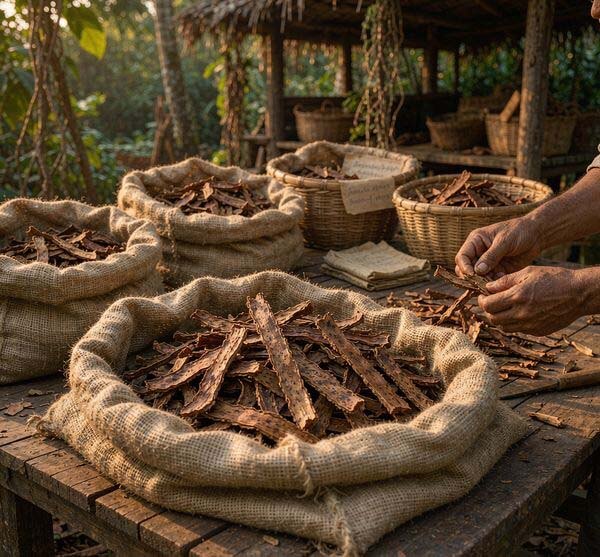
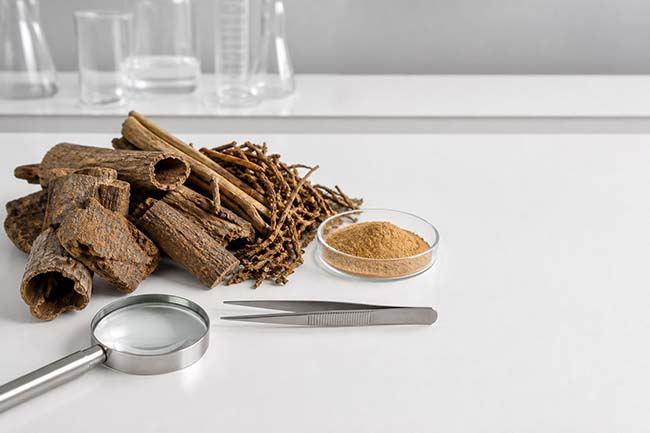
The genus Uncaria (family Rubiaceae) contains roughly 40 species distributed across the tropics. Two species dominate commercial interest for supplements: Uncaria tomentosa, native to the Amazon basin including the Peruvian Amazon, and Uncaria guianensis. Supplement materials are most commonly described as derived from the root or vine bark of U. tomentosa.
There is also a naming trap that catches buyers outside the herbal trade. Uncaria rhynchophylla — a species used in traditional Chinese medicine — is also referred to in English as "cat's claw herb." It shares a genus name with the Amazonian vine, but it is a different species, with a different origin, a different supply chain, and a different alkaloid profile.
So when a supplier quotes "cat's claw extract," three materially different things can sit behind that phrase: U. tomentosa, U. guianensis, or another Uncaria species entirely.
Why Species Mix-Ups Happen in This Category
Three structural reasons make cat's claw unusually exposed to identity problems:
Wild collection. Much of the raw material is wild-harvested rather than cultivated. Wild collection means variable plant populations, variable harvest regions, and collection records that are only as good as the collector's paperwork.
Look-alike raw material. The commercial material is dried bark and vine. Once dried and milled, morphological identification is limited — you cannot reliably tell species apart by eye in powder form.
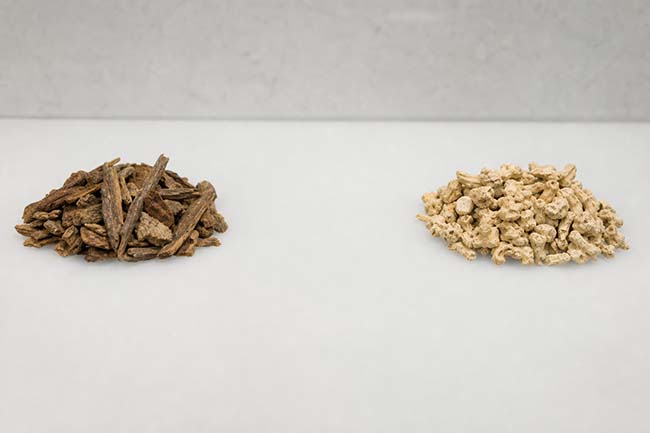
A shared genus name. Because multiple Uncaria species are traded internationally for different markets, substitution with a cheaper species inside the same genus can look plausible on a commercial document.
None of this requires bad intent. A specification that says only "cat's claw extract" invites all three risks; a specification that names the species closes most of them.
Why the Distinction Matters Commercially
Species identity is not a botanical formality. It drives:
Specification reproducibility. Alkaloid profiles differ by species. A purchase specification written for U. tomentosa is not automatically valid for another Uncaria species.
Documentation consistency. Organic certification, import paperwork, and label declarations all reference a specific material. If the species on the certificate and the species in the drum do not match, the paperwork is void even if nobody intended a substitution.
Safety review. Published research on Uncaria species includes work on herb-drug interaction pathways for U. rhynchophylla — evidence that species-level identification feeds directly into a brand's safety assessment, not just its quality file.
For a supplement brand, the practical output is simple: the Latin binomial belongs in the specification, the COA, and the purchase order.
How Buyers Verify Identity Before Committing
A workable identity verification stack, ordered from cheapest to most definitive:
1. Demand the Latin binomial with botanical authority. "Cat's claw extract" is not an identity. "Uncaria tomentosa (Willd. ex Schult.) DC." is. Ask for harvest region and plant part (root bark, vine bark, or aerial parts) as well.
2. Request the collection and traceability record. For wild-collected material, the useful record shows collection region, collection period, and the batch link between collected material and finished extract.
3. Use DNA-based identification as the first screen. Peer-reviewed work on Uncaria materials concludes that DNA barcoding should serve as the primary screening step for identification, with quantitative analysis layered on top. Molecular methods are what separate "same genus" from "same species."
4. Combine with a chromatographic fingerprint. HPTLC or HPLC profiling supports the identity claim and simultaneously establishes the alkaloid pattern you will rely on for batch-to-batch comparison.
5. Verify consistency across batches. Ask for identity documentation from more than one production batch. A single clean document proves nothing about routine practice.

Buyer Checklist
Latin binomial (with authority) stated on the specification, COA, and PO
Plant part defined: root bark, vine bark, or aerial parts
Harvest region and collection period documented
DNA-based identification available as a first screening step
Chromatographic fingerprint supplied alongside the alkaloid assay
Organic or other certificates reference the same species
Multi-batch documentation, not one clean example
Frequently Asked Questions
Is Uncaria guianensis the same as Uncaria tomentosa?
No. They are different species, both traded commercially, with distinct alkaloid profiles. A specification must name which one you are buying.
Why does "cat's claw herb" sometimes refer to a Chinese medicine species?
Uncaria rhynchophylla is also called cat's claw herb in English. It is not the Amazonian vine used in most cat's claw supplements, and English-language search results can mix the two.
Can a dried, milled powder be identified by appearance?
Reliably, no. Once material is milled, identification depends on molecular and chromatographic methods, which is why documentation and testing — not visual inspection — settle the question.
What is the single most effective step?
Putting the full Latin binomial in the specification and refusing to accept "cat's claw extract" as a product identity on any document.
Hui Ding 16 years in botanical extraction
Scientifically reviewed by the :KH Health Quality Assurance Team (ISO-certified facility)
Published: January 15, 2026 · Updated: August 28, 2026