
 +86 13096987266




How to take dihydroberberine for weight loss?
2026-05-27
As a professional plant extract manufacturer with 15+ years of experience in producing and supplying dihydroberberine raw materials, I’ve noticed a huge content gap in the global supplement market. Most online guides only teach end consumers how to take dihydroberberine for personal weight loss, while there are few systematic, authoritative tutorials for brand owners, formulators, and bulk buyers. Today, I will break down the core industrial application knowledge of dihydroberberine for weight loss, covering purity-based dosage design, formulation techniques, dosage form adaptation, and raw material selection differences, to help you develop compliant, effective, and market-competitive weight loss supplements.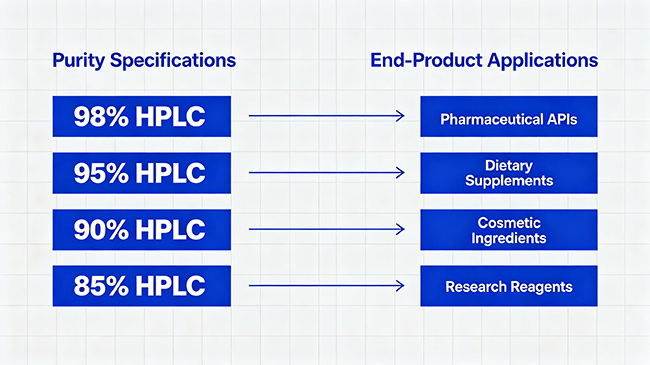
1. Weight Loss Dosage Design: Based on Dihydroberberine Raw Material Purity
Purity is the core factor that determines the safe and effective dosage of dihydroberberine in finished weight loss products. Many new formulators make the mistake of using a universal dosage for all purity specifications, which leads to either ineffective products or excessive ingredient content that violates compliance standards. Based on our production data and global dietary supplement industry norms, I have sorted out the standardized addition and oral dosage for mainstream dihydroberberine purity grades.
For 98% high-purity dihydroberberine extract, the most mainstream specification for commercial weight loss supplements, the recommended industrial addition dosage for finished products is 200–400mg per serving. Converted to daily oral dosage for end users, 200mg per day is suitable for daily metabolic regulation and mild weight management, while 400mg per day is the optimal enhanced dosage for fat reduction, targeting insulin resistance and visceral fat accumulation.
For 99% ultra-high-purity dihydroberberine, due to its higher bioavailability and fewer impurity components, the dosage can be appropriately reduced. The standard single serving addition is 150–300mg, avoiding excess intake while ensuring the same weight loss effect. For low-purity industrial-grade dihydroberberine (below 90%), we do not recommend it for oral weight loss supplements, as residual impurities may cause gastrointestinal irritation and fail to meet EU and FDA dietary safety standards.
2. Industrial Application: Powder Processing, Granulation & Filling Adaptation
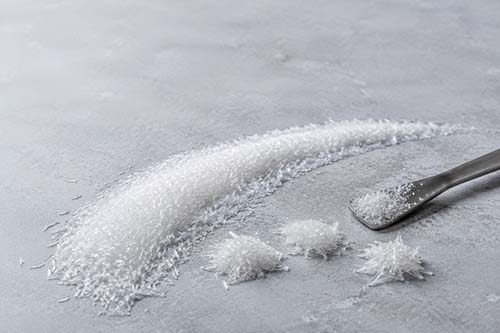
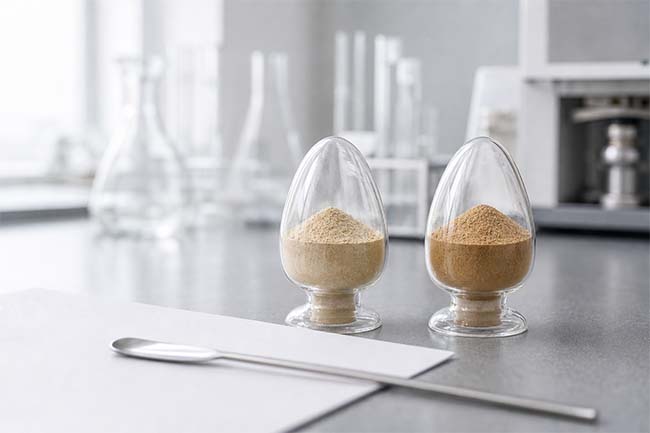
Many bulk purchasers and OEM partners consult me about the processing adaptability of dihydroberberine powder. As a fine plant extract powder, raw dihydroberberine has fine particle size and slight hygroscopicity, which requires standardized processing for mass production of finished products.
In terms of granulation technology, the original dihydroberberine powder is easy to agglomerate when directly filled. We recommend dry granulation for weight loss supplement production. This process does not require water or high temperature, which completely retains the active ingredients of dihydroberberine and avoids activity loss. The granulated particles have good fluidity, which greatly improves filling efficiency and ensures uniform content in each finished product.
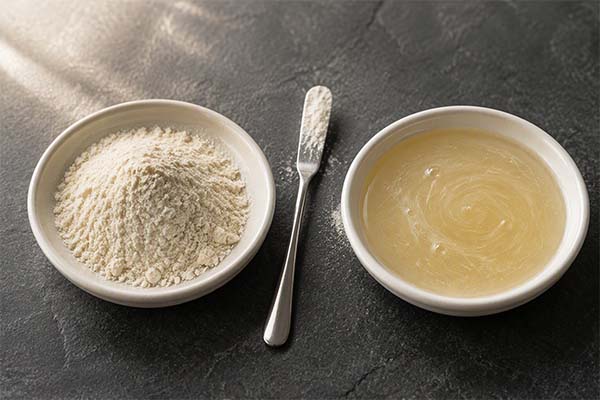
For dosage form adaptation, dihydroberberine is highly compatible with mainstream weight loss supplement forms. Granulated particles are most suitable for hard capsule filling, the mainstream form of global weight loss products. The original fine powder can be mixed with white kidney bean extract, chromium picolinate and other fat-loss ingredients to produce solid beverage powder. It is not recommended for soft capsules, as its powder physical property is not compatible with oil-based soft capsule systems.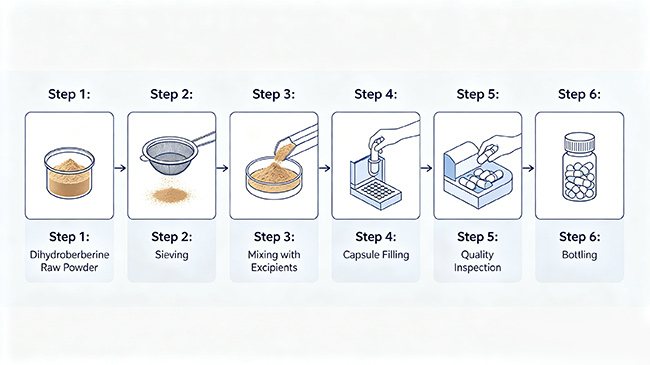
3. Raw Material Selection: Process & Purity Differences Affect Terminal Usage
Not all dihydroberberine extracts have the same terminal application effect. Different extraction processes and purity grades create obvious differences in product efficacy, safety and applicable crowds, which is a key reference for your product positioning.
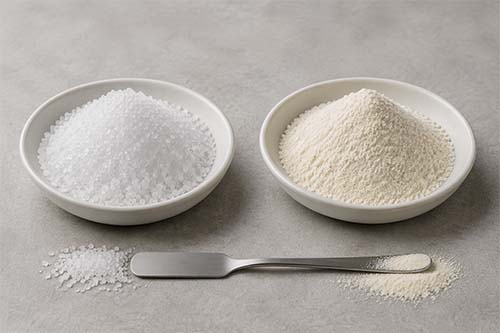
The natural solvent extraction process we adopt produces high-purity dihydroberberine with low solvent residue, mild properties, and no gastrointestinal irritation. Finished products made from this raw material are suitable for long-term weight management and can be applied to high-end health supplement lines. In contrast, chemical reduction synthesized dihydroberberine has higher impurity content, which is only suitable for low-cost generic products and has strict daily dosage limits.
In terms of terminal usage difference, 98% purified dihydroberberine with natural extraction is the most cost-effective choice for mass-market weight loss supplements, balancing efficacy, safety and production cost. 99% ultra-high-purity products are more suitable for high-end functional supplements targeting obese groups and people with metabolic disorders, with better absorption and faster fat-burning effects.
4. Global Compliance Dosage Standards & B2B Purchasing Guide
For cross-border supplement brands, compliance is the top priority for product listing. According to global dietary supplement safety specifications, the daily safe intake of dihydroberberine for weight loss is limited to a maximum of 500mg for adults. Excessive dosage will trigger safety risks and lead to product off-shelf risks in European and American markets.
As a manufacturer, I deeply understand the core demands of B-end customers: stable quality, compliant specifications, and cost-effective bulk supply. We provide customizable dihydroberberine raw materials of 98% and 99% purity, with complete COA test reports, factory qualification certificates, and support sample testing before bulk procurement. Whether you need small-batch trial production or large-scale bulk ordering, we can provide targeted formulation technical support to help you optimize your weight loss product formula.
Final Thoughts
Dihydroberberine is a star ingredient in the global weight loss supplement industry, but standardized industrial formulation and raw material selection are the key to product success. Different from consumer-end taking guides, this industrial-level application guide solves the core pain points of formulators and purchasers in dosage design, processing adaptation and raw material selection. Choosing high-purity, naturally extracted dihydroberberine raw materials is not only conducive to stable product efficacy, but also meets global market compliance requirements.
Reference Sources
1. National Center for Biotechnology Information (NCBI): Pharmacology and Safety Profile of Dihydroberberine
2. FDA Dietary Supplement Ingredient Database: Daily Intake Standards for Berberine Derivatives
3. European Food Safety Authority (EFSA): Safety Assessment of Plant Extract Supplements for Weight Management
Hui Ding 16 years in botanical extraction
Scientifically reviewed by the :KH Health Quality Assurance Team (ISO-certified facility)
Published: January 15, 2026 · Updated: August 28, 2026