So, why should you pick Natural Ginger Powderwhen you're sourcing it globally? Well, it really boils down to consistency, being able to trace where your product comes from, and having a solid supply chain experience. Natural Ginger Powder comes in a handy form that’s perfect for beverage makers, bakers, supplement companies, and food service folks. The warm aroma and fine texture make it easier to keep things uniform compared to freshly chopped roots. But here’s the catch — the quality can vary a LOT depending on where it’s sourced from.
Looking at UN FAOSTAT data, China and India are among the top players in ginger production. And the International Trade Centre shows there’s quite a busy global trade in dried ginger products. According to Grand View Research, the demand for ginger is still growing across food, drinks, and wellness markets. All this points to a real opportunity, but don’t forget — market trends don’t guarantee product quality. A forecast is great, but it’s no substitute for actually checking your supplier.
Good sourcing isn’t just about getting a sweet deal price-wise. You’ve gotta dig into details like moisture levels, mesh size, microbial safety, pesticide tests, allergen info, and how easy it is to trace each batch back to its origin. Systems based on HACCP or ISO 22000 standards help keep things in check, no doubt. A serious supplier should be able to provide sample products, detailed specs, and recent lab reports. Little things like a sealed 25-kg bag, clear lot numbers, and a tidy warehouse can tell you a lot about how serious their operations are.
From our experience, don’t be fooled just by the color alone. A lighter powder might pack a punch in flavor, while darker ones aren’t necessarily worse — often, the processing method makes the difference. You really need to test it in your own recipes, not just judge it by a quick look inside a small pouch. CBI’s market guidance stresses the importance of documentation, food safety, and making sure everything matches what you need for international trade. Partnering with a transparent supplier helps cut down on supply issues, quality headaches, and the need for costly reformulations. It’s not about finding the perfect solution — it’s about making smarter choices backed by solid evidence on every shipment.
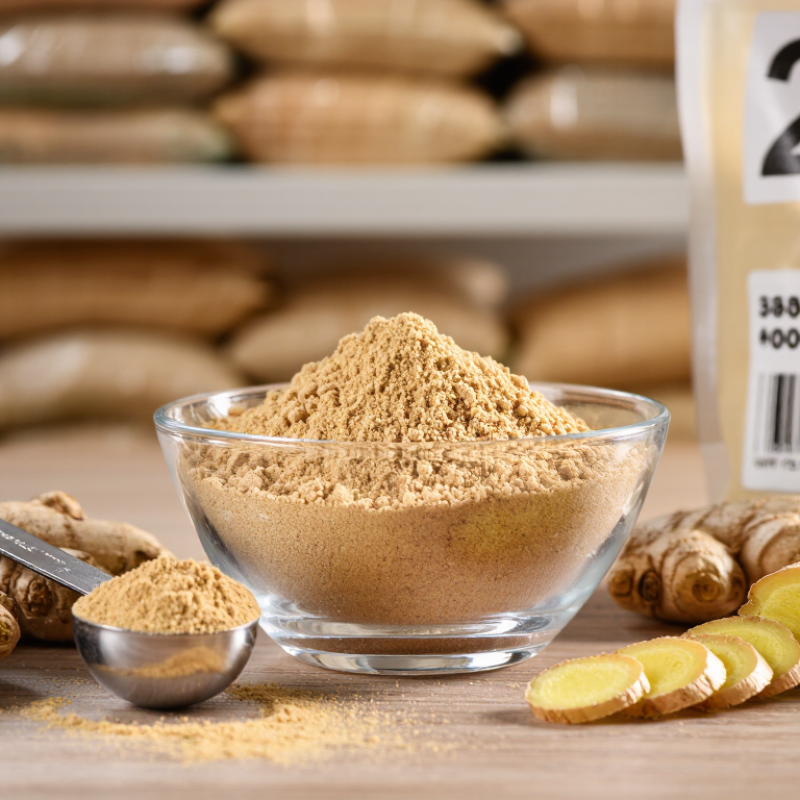
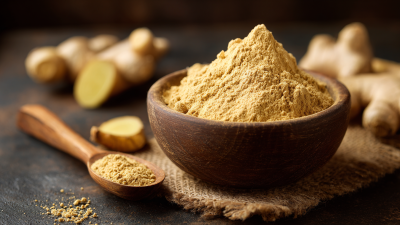
Natural ginger powder is made from the dried rhizome of Zingiber officinale. It is not the same as Organic Ginger Extract Powder. Extract powder is concentrated after water or another approved extraction process. Natural powder usually contains the milled, dried ginger root.
Production begins with harvest selection. Processors remove soil, damaged pieces, and foreign material. The rhizomes are washed, sliced, and dried under controlled heat. Lower temperatures can better protect aroma, but drying takes longer. After drying, the slices are milled and passed through a sieve. The final powder should show a clean ginger aroma, even color, and low moisture. It should not smell burnt. FAOSTAT data show global ginger output has exceeded four million tonnes in recent reporting years. This scale makes consistent sourcing important. The Codex standard for dried culinary herbs and spices also highlights hygiene, identity, and contaminant control. CBI market analysis further identifies traceability and microbiological testing as key buyer requirements.
Tips: Ask suppliers for harvest origin, moisture results, microbial reports, and processing details. Check whether the powder is ground whole ginger or a concentrated extract. Natural color may vary between crops. That is normal, but unexplained variation deserves questions. A perfect-looking sample is not always the most authentic one. Verify certifications independently, because documents can become outdated. Drying and storage remain weak points, especially in humid climates. Suppliers should use sealed, food-grade packaging and control warehouse humidity.
Natural ginger powder offers more than a warm aroma. USDA FoodData Central reports that 100 grams of raw ginger contains about 80 calories, 17.8 grams of carbohydrates, and 2 grams of dietary fiber. Powdered ginger is more concentrated by weight, so serving size matters. Small amounts can deliver strong flavor.
Its functional appeal comes from gingerols and related compounds. A peer-reviewed review in Foods links these compounds with antioxidant and digestive research, while the WHO Monographs on Selected Medicinal Plants documents ginger’s traditional use for digestive discomfort. These findings support careful sourcing, but they do not justify exaggerated health claims. Organic Ginger Root Extract is different from ordinary powder and requires separate identity, testing, and specification controls.
In culinary use, powder disperses easily in sauces, bakery mixes, instant beverages, and seasoning blends. It also stores more efficiently than fresh roots. Codex guidance for dried culinary herbs highlights the importance of cleanliness, moisture control, and correct labeling. Practical inspections should check color, aroma, mesh size, moisture, and microbial results. The aroma should feel bright and peppery, not dusty. Yet powder can lose volatile notes during long storage. That detail is easy to overlook. Sampling only one shipment may also create false confidence.
Natural ginger powder offers practical advantages for global sourcing. It is shelf-stable, compact, and easier to standardize than fresh rhizomes. A 2024 Grand View Research report estimated the global ginger market at more than USD 6 billion, with continued growth in food, beverage, and wellness applications. Powder supports this expansion because it reduces cold-chain dependence and simplifies cross-border handling.
The advantages are measurable. One teaspoon disperses into bakery mixes, instant drinks, sauces, and capsules with limited preparation. The USDA FoodData Central database lists ground ginger as a concentrated source of carbohydrates and fiber by weight. Its warm aroma also provides noticeable flavor at relatively small usage levels. However, quality is not automatic. Gingerol content can vary with cultivar, harvest age, drying temperature, and storage humidity. That detail matters.
FAOSTAT identifies China and India as leading ginger-producing countries, giving buyers broader sourcing options. Suppliers should request pesticide-residue, microbiological, heavy-metal, moisture, and adulteration reports. Independent laboratory verification is stronger than a polished specification sheet. For beverage developers, natural ginger powder can support clean-label positioning, while black ginger extract for functional beverages serves a different formulation purpose and should not be treated as equivalent. Powder may sediment. It may also taste harsh. Pilot trials should test particle size, dispersibility, pungency, and sediment after 24 hours. This step is often skipped, and that is where an apparently efficient purchase can become expensive.
Why Choose Natural Ginger Powder for Global Sourcing?
Quality Standards for Global Sourcing
Natural ginger powder should be judged by evidence, not appearance alone. In supplier audits, I look for clear botanical identification, harvest records, and batch-level traceability. A warm aroma and fine texture are useful signs. They are not enough.
Reliable suppliers test moisture, microbiological quality, pesticide residues, and heavy metals. Results should come from qualified laboratories and match the actual production batch. The certificate of analysis must show test dates, methods, and limits. Samples also deserve practical checks. I compare color, aroma, particle size, and rehydration behavior after arrival. Small differences can reveal storage or milling problems.
Traceability matters beyond the factory gate. Export documents, packaging details, and destination-market requirements should agree. A black ginger extract factory may follow different specifications, so buyers should not treat extract standards as powder standards. Supplier visits can confirm sanitation, allergen controls, pest prevention, and dry storage conditions. Ask how rejected material is handled. The answer often shows operational maturity.
No audit is perfect. Samples may miss variation between pallets, and paperwork can hide weak controls. That is why periodic retesting and retained samples are valuable. One overlooked detail can affect an entire shipment. Careful sourcing protects consistency without pretending that risk disappears.
A practical quality-control framework for sourcing natural ginger powder across international markets. Numerical targets marked as buyer specifications should be confirmed against the destination market's regulations and the final product application.
| Quality Area | Quality Dimension | Recommended Requirement or Reference | Typical Verification Method | Why It Matters in Global Sourcing |
|---|---|---|---|---|
| Raw Material Identity | Botanical identity | The product should be declared as dried rhizome of Zingiber officinale and should not contain undeclared plant materials. | Supplier documentation, macroscopic examination, and botanical or DNA identification when authenticity is disputed. | Confirms that the powder is genuine ginger and reduces substitution risk. |
| Sensory profile | Clean, characteristic ginger aroma and flavor; no musty, fermented, smoky, rancid, chemical, or foreign odors. | Sensory panel assessment using a documented specification and retained reference sample. | Natural ginger quality is strongly reflected in aroma, pungency, and freshness. | |
| Foreign matter | No visible stones, soil, insects, plastic, metal, glass, or other extraneous material. A buyer specification should define the maximum tolerance as zero for hazardous foreign matter. | Visual inspection, sieving, magnets, metal detection, and documented cleaning records. | Protects consumer safety and supports compliance with food-import requirements. | |
| Physical and Chemical Quality | Moisture content | Common commercial target: not more than 10% by mass, unless the product specification or local regulation requires a different limit. | Validated loss-on-drying or moisture-analyzer method; test each lot or according to a risk-based plan. | Lower moisture helps limit microbial growth, caking, enzymatic deterioration, and loss of shelf life. |
| Particle size | Specify the required mesh or sieve profile, such as a defined percentage passing through 60-80 mesh, according to the intended use. | Standard sieve analysis with results reported as percentage retained and percentage passing. | Consistent particle size improves blending, dosing, dispersion, and appearance. | |
| Volatile oil | Set a minimum value appropriate to the product grade; volatile-oil content is commonly measured as an identity and aroma indicator rather than as a universal legal limit. | Hydrodistillation or another validated method, such as the relevant international pharmacopoeial or food-testing procedure. | Helps evaluate characteristic ginger aroma and detect excessive dilution or poor storage. | |
| Color and appearance | Uniform pale yellow to light brown powder, free-flowing or with only minor reversible agglomeration; no abnormal darkening or visible mold. | Visual comparison against an approved reference sample; color measurement may be added for large-volume programs. | Supports consistent product presentation and helps identify oxidation, overheating, or contamination. | |
| Food Safety | Salmonella | Absent in the analytical portion specified by the applicable destination-market regulation or customer food-safety specification. | Testing by a validated method, such as an applicable ISO method, with an accredited laboratory where required. | Salmonella is a serious foodborne hazard and is frequently controlled for low-moisture spices. |
| Pathogenic microorganisms | Meet the microbiological criteria applicable to the destination market and product category, including requirements for organisms such as Escherichia coli where relevant. | Routine microbiological testing under an approved sampling plan and laboratory quality system. | Microbiological limits vary by jurisdiction, so destination-specific compliance is essential. | |
| Yeasts and molds | Set a documented maximum count based on the intended use, risk assessment, and destination-market requirements; the lot should show no visible mold. | Validated plate-count method and inspection of the finished powder and packaging environment. | High counts can indicate poor drying or storage and may reduce shelf stability. | |
| Mycotoxins | Comply with the legally applicable limits for aflatoxins and ochratoxin A, where regulated. Limits differ among importing markets and product categories. | Representative sampling followed by validated HPLC, LC-MS/MS, or equivalent laboratory analysis. | Mycotoxins are regulated contaminants that can originate from inadequate drying or humid storage. | |
| Chemical Compliance | Pesticide residues | All detected residues must comply with the maximum residue limits of the destination country or region. If no local limit exists, the applicable default or Codex reference should be assessed. | Multi-residue screening by an accredited laboratory, typically using LC-MS/MS and GC-MS/MS methods. | Residue limits are market-specific and can affect customs clearance, saleability, and consumer safety. |
| Heavy metals | Lead, arsenic, cadmium, and mercury should meet the limits applicable to spices and food ingredients in the destination market. | Representative sampling followed by ICP-MS or another validated elemental-analysis method. | Heavy metals may enter the supply chain through soil, water, processing equipment, or environmental contamination. | |
| Adulteration and undeclared additives | No added flour, starch, synthetic color, spent spice, undeclared carrier, or other adulterant. Product composition should match the label and purchase specification. | Identity testing, microscopy, FTIR or NIR screening, and targeted chemical analysis when indicated by risk assessment. | Authenticity testing protects product integrity and prevents labeling and regulatory problems. | |
| Process Control | Drying and processing hygiene | Use controlled drying, hygienic milling, effective sieving, and documented cleaning procedures. The process should follow HACCP principles or an equivalent preventive food-safety system. | Process audit, hazard analysis, sanitation records, environmental monitoring, and review of corrective actions. | Preventive controls reduce contamination risks that cannot be detected reliably by finished-product testing alone. |
| Food-safety management system | A documented system aligned with recognized frameworks such as HACCP and ISO 22000:2018, when required by the buyer or market. | Certification review where applicable, supplier audit, internal-audit records, and verification of critical control points. | A structured system improves consistency, traceability, corrective action, and supplier qualification. | |
| Allergen and cross-contact control | Declare allergens according to destination-market law and control cross-contact with allergens processed in the same facility. | Allergen risk assessment, production scheduling, cleaning validation, label review, and targeted testing when justified. | Labeling obligations and allergen definitions differ between markets. | |
| Packaging and Logistics | Packaging suitability | Use clean, food-contact-compliant, moisture-barrier packaging that protects the powder from oxygen, light, pests, and contamination. | Packaging specification, food-contact declaration, seal-integrity checks, and packaging-line inspection. | Ginger powder can absorb moisture and lose aroma during long international transit. |
| Storage and transport conditions | Store in a cool, dry, clean, odor-free area, protected from direct sunlight and condensation. Apply first-expired, first-out inventory control. | Warehouse inspection, temperature and humidity records where appropriate, and transport-condition review. | Stable environmental conditions help preserve color, aroma, flowability, and microbiological quality. | |
| Shelf life | Assign a shelf life using stability evidence and packaging performance; verify quality at the end of the stated period rather than relying only on a fixed industry assumption. | Periodic testing of moisture, sensory quality, microbiology, and relevant chemical markers under defined storage conditions. | Evidence-based shelf life reduces claims, waste, and quality disputes after shipment. | |
| Traceability and Documentation | Lot traceability | Each lot should link the finished powder to the raw-material source, harvest or receiving date, processing date, production line, packaging date, and shipment records. | Traceability exercise completed within a defined response time, supported by batch records and inventory controls. | Fast traceability enables targeted recalls and effective investigation of quality deviations. |
| Certificate of analysis | Provide a lot-specific certificate covering identity, moisture, microbiological results, relevant contaminants, physical specifications, and test methods. | Compare the certificate with independent verification testing and review laboratory accreditation or competence. | Lot-specific data are more useful than generic product brochures for import release and supplier approval. | |
| Regulatory and labeling information | Documentation should support the destination-market requirements for ingredient declaration, country of origin, net weight, lot code, dates, storage instructions, and language. | Regulatory review before shipment and reconciliation of the label, commercial invoice, packing list, and certificate of analysis. | Accurate documentation reduces customs delays, relabeling costs, and non-compliance risk. |
Note: Numerical values shown as commercial targets are examples for procurement specifications, not universal legal limits. Always confirm the latest requirements of the importing country, the product category, and the intended application before finalizing a purchase specification.
Natural ginger powder sourcing depends on more than the listed price. FAOSTAT data for 2022 records global ginger production at approximately 4.9 million tonnes, with Asia supplying most of the crop. Weather, planting decisions, and regional harvest timing can quickly tighten supply. A failed monsoon or excessive rain may reduce rhizome quality before processing begins.
Drying changes the economics. Fresh ginger contains substantial moisture, so processors need several kilograms to produce one kilogram of powder. Energy costs, labor, milling capacity, and packaging materials then influence the final quotation. The World Bank Commodity Markets Outlook shows how energy and agricultural input costs can affect food processing expenses. Freight remains another variable, especially when containers, port delays, or currency movements change landed costs.
Availability also depends on specifications. Fine mesh powder, low moisture, consistent color, and verified microbiological results require controlled processing. Testing should cover moisture, microbial limits, pesticide residues, and traceability. ISO 22000-based food safety systems can strengthen supplier reliability, although certification alone does not guarantee every shipment. Buyers should compare harvest dates, drying methods, batch records, and realistic lead times. Cheap powder may reflect weaker testing or older stock. That assumption can be wrong. A practical sourcing plan keeps approved alternatives and accepts that seasonal pricing will never be perfectly stable.
Natural ginger powder offers a practical format for international food and beverage supply chains. It is easier to measure, blend, and store than fresh ginger. However, quality depends heavily on packaging and handling. In practical sourcing work, I look for food-grade inner liners, strong outer cartons, and sealed packaging that limits moisture exposure. Each lot should carry a clear batch number, production date, and best-before date. A certificate of analysis can support checks for moisture, microbiological quality, and product identity. Packaging should also prevent tears during pallet movement. Small failures can create large losses.
Storage conditions matter from the warehouse to the destination port. Keep the powder in a cool, dry, clean area, away from sunlight, chemicals, and strong odors. Excess humidity may cause clumping and reduce usability. During international shipping, use dry containers and stable pallets. Avoid placing cartons directly against wet container walls. Shipping documents should match the product description, quantity, origin, and destination requirements. Import rules vary, so buyers should confirm current food regulations before dispatch. No package is perfect. I still prefer suppliers who test their packing process, not only the final powder.
Tips: Request sample cartons before placing a large order. Check liner thickness, seal strength, carton compression, and visible powder residue. Ask for lot traceability records and storage instructions. Include humidity-control materials when suitable, but confirm they are food-safe. Plan buffer time for customs inspections, port delays, and seasonal weather.
It is shelf-stable, compact, and easier to measure than fresh ginger. One teaspoon can enter bakery mixes, drinks, sauces, or capsules. It also reduces dependence on refrigerated transport. The format is practical.
Request moisture, microbiological, pesticide-residue, heavy-metal, and adulteration tests. The certificate should identify the batch, test date, methods, and limits. Independent laboratory results are more reliable than appearance alone. Paperwork can still mislead.
Check botanical identification, harvest records, and batch-level traceability. Compare color, aroma, particle size, and rehydration behavior after delivery. A warm aroma helps, but it proves little alone. Samples may not represent every pallet.
Use food-grade inner liners, sealed bags, and strong outer cartons. Each lot should show a batch number, production date, and best-before date. Packaging must resist tears during pallet movement. Small leaks become expensive.
Store it in a cool, dry, clean area away from sunlight and strong odors. Keep cartons away from chemicals and wet container walls. Humidity can cause clumping and reduce usability. Dry storage matters.
Test particle size, dispersibility, pungency, flavor harshness, and sediment after 24 hours. A beverage may look smooth initially, then leave visible material at the bottom. Test the actual formula, not only a laboratory sample. Pilot work is often skipped.
Match product descriptions, quantities, origin details, and destination documents. Use stable pallets and dry containers during transport. Allow buffer time for inspections, port delays, and seasonal weather. Delays happen.
No. Gingerol content can change with cultivar, harvest age, drying temperature, and humidity. Storage conditions may also affect aroma and pungency. Retained samples and periodic retesting help reveal variation. Consistency is managed, not guaranteed.
Natural Ginger Powder is made by cleaning, slicing, drying, and finely grinding mature ginger roots under controlled conditions. This process creates a convenient ingredient with ginger’s characteristic aroma, warm flavor, and naturally occurring compounds, making it suitable for beverages, baked goods, sauces, seasonings, and food formulations. Its long shelf life and easy handling also make it practical for commercial and culinary use.
For global sourcing, buyers should evaluate product purity, moisture content, color, aroma, particle size, microbial safety, and compliance with applicable food standards. Price and availability may vary according to harvest conditions, origin, processing methods, order volume, and market demand. Reliable packaging should protect the powder from moisture, light, contamination, and odor absorption during storage and international transportation. Clear labeling, suitable shipping materials, stable storage conditions, and careful documentation can help preserve quality and support efficient cross-border supply.