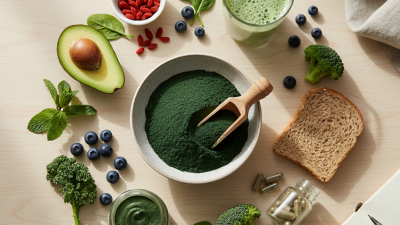
When it comes to picking a reliable Spirulina Powder supplier, a shiny, green product photo just isn’t enough for global buyers. There’s actually a lot that can affect quality—things like the water used during cultivation, drying temps, harvest times, and how the product is stored. A trustworthy supplier should be upfront and clear about these factors. Plus, they should always share up-to-date certificates of analysis for each batch they produce.
In this guide, we’re looking at some well-known suppliers like Earthrise Nutritionals, Cyanotech Corporation, DIC Corporation, and Hainan DIC Marketing. Keep in mind, their capabilities might vary depending on where you’re sourcing from, the product grade, packaging options, and minimum order sizes. It’s a good idea to check out the details on Spirulina Powder Ingredients, including protein content, phycocyanin levels, moisture, microbial results, heavy metals, and allergen info. Don’t forget to verify organic claims and sustainability—having a certificate helps, but it’s not the whole story.
Experience really matters when evaluating suppliers. Always ask for a recent sample—preferably sealed in a labeled pouch—before you commit to a big order. Take a look at its color, smell, how easily it dissolves, and compare lab results with the technical specs. Also, ask how they handle contamination, manage traceability, and ensure proper transport for temperature-sensitive batches. Good packaging should shield the powder from light, humidity, and oxygen—little details like these really add up.
Of course, no supplier is perfect. Even the best companies can run into seasonal hiccups, delays with paperwork, or sometimes inconsistent communication. That’s why it’s smart to look at how quickly they respond, the quality of their documentation, their production capacity, and how they handle complaints. Independent lab testing can also verify some of their claims before you buy. A professional supplier will actually welcome reasonable questions instead of dodging them. Making the right choice boils down to balancing proven quality, clear and honest communication, responsible sourcing, and a stable long-term supply. Price is important, sure, but going for the cheapest option might end up costing more in the long run if problems pop up later on.
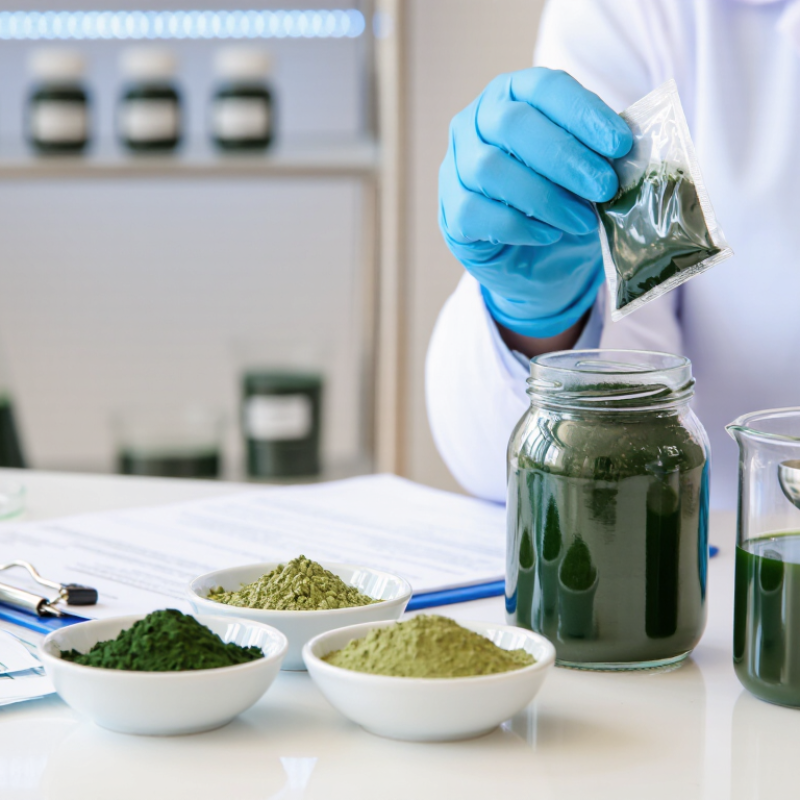
Spirulina powder is a dried form of Arthrospira, a blue-green cyanobacterium grown in alkaline water. It is not seaweed, although many buyers describe it that way. The FAO technical review on spirulina reports approximately 55–70% protein by dry weight. It also contains phycocyanin, iron, and carotenoids. Nutritional values vary with cultivation, drying, and storage conditions.
Global buyers source spirulina because it is lightweight, shelf-stable, and easy to blend into tablets, smoothies, and fortified foods. Grand View Research valued the global spirulina market at over US$600 million in 2023 and expects strong growth through 2030. That projection reflects rising interest in plant-based nutrition, but market forecasts are not guarantees. I would treat them as direction, not proof of demand.
For procurement, buyers should request batch-specific certificates of analysis. Testing should cover protein, moisture, heavy metals, microbial limits, and cyanotoxins. Organic claims also require verification against the relevant importing market. The phrase “100 Organic Spirulina Powder” may attract searches, but it can create confusion if “100” is not clearly defined. Is it purity, organic content, or pack size? A clean specification should state the species, cultivation method, country of origin, drying temperature, and packaging barrier. Bright green powder is useful evidence, not enough evidence.
Top Spirulina Powder Suppliers for Global Buyers?
When evaluating spirulina powder suppliers, buyers should inspect evidence, not polished claims. Request a recent certificate of analysis for every production lot. Check protein content, moisture, microbiological limits, heavy metals, and unwanted residues. Results should come from an independent laboratory with clear testing methods. A supplier that avoids specific answers deserves caution.
Traceability matters during real purchasing. Ask where the algae is cultivated, how water quality is monitored, and when harvesting occurs. Production records should connect the finished powder to a defined batch. Packaging should protect the powder from moisture, heat, and strong light. For buyers searching Spirulina Powder Gluten Free, request cross-contact controls, facility information, and suitable verification. “Gluten-free” should not be treated as an automatic assumption.
Practical experience also reveals supplier quality. Order a sample and compare color, aroma, solubility, and powder texture against the specification. Small differences can signal storage or processing issues. Confirm lead times, minimum order quantities, export documents, and complaint procedures before signing. Communication speed matters. So does honesty. A supplier may provide excellent documents yet lack dependable logistics, and I have seen buyers overlook this weakness. Regular audits can help, although audits are not perfect. Leave room for rechecking data when the harvest, facility, or formulation changes.
| Evaluation Dimension | What Global Buyers Should Check | Preferred Benchmark | Recommended Evidence | Buyer Risk Signal | Priority |
|---|---|---|---|---|---|
| Product Identity | Confirm that the material is food-grade spirulina powder derived from edible microalgae and that the scientific identity is clearly stated. | Clear species or strain information, product specification, intended use, and country of origin. | Product specification sheet, technical data sheet, production-flow description, and origin statement. | Unclear species, vague product description, or inconsistent naming across documents. | Critical |
| Protein Content | Compare protein values on a consistent basis because moisture and test methods can affect the reported percentage. | Typically about 55–70% protein on a dry-weight basis for commercial spirulina powder, subject to the agreed test method. | Recent certificate of analysis with moisture basis, analytical method, batch number, and test date. | High protein claim without a test method, dry-basis information, or batch-specific result. | High |
| Moisture and Water Activity | Low moisture supports powder stability and helps reduce the risk of microbial growth during storage and transportation. | Moisture commonly controlled at approximately 7–10% or lower, with the contractual limit defined by the buyer and application. | Batch COA, water-activity result where applicable, packaging specification, and storage instructions. | No moisture limit, no storage guidance, or visible clumping in samples. | High |
| Microbiological Safety | Verify that the powder meets food-safety requirements for pathogens and general microbial counts in the destination market. | Salmonella and E. coli absent in the tested portion; other limits should follow the applicable destination-market standard. | Batch-specific microbiological COA from an ISO/IEC 17025-accredited laboratory or an equivalently qualified facility. | Only an internal declaration, outdated testing, or missing pathogen results. | Critical |
| Heavy Metals | Assess lead, arsenic, cadmium, and mercury because algae can accumulate contaminants from water and growing environments. | Results comply with the legal limits of the target market and the buyer’s product category. | Recent ICP-MS or equivalent laboratory report covering the relevant heavy metals. | “Heavy-metal free” wording without numeric results or without a defined analytical method. | Critical |
| Microcystin Control | Confirm testing for microcystins, which are cyanobacterial toxins that require specific control in spirulina products. | A documented control program and results within the regulatory or customer-defined limit for the destination market. | Batch test report, water-monitoring records, harvest-control procedure, and corrective-action process. | No microcystin testing, no water-quality monitoring, or reliance only on a general safety statement. | Critical |
| Color and Sensory Quality | Evaluate color, odor, taste, particle size, and dispersibility against the intended application. | Uniform blue-green color, characteristic odor, no abnormal rancid or chemical smell, and consistent powder texture. | Approved reference sample, sensory specification, color standard, and retained-sample procedure. | Large variation between samples or unexplained darkening, strong odor, or excessive sediment. | Medium |
| Contaminant and Adulteration Screening | Check for undeclared dyes, non-spirulina fillers, prohibited substances, pesticides, and other contaminants relevant to the market. | Risk-based screening plan that reflects the raw-material source, processing method, and destination regulations. | Identity testing, pesticide report where required, non-targeted screening, and supplier authenticity declaration. | Unusually bright color, inconsistent composition, or pricing that is materially below the market range without explanation. | High |
| Certifications and Food-Safety System | Review whether the production site operates under a recognized food-safety management and quality-assurance system. | Valid HACCP-based system, GMP controls, and a recognized certification such as ISO 22000, FSSC 22000, BRCGS, or equivalent where appropriate. | Current certificates, scope statement, issuing-body details, audit date, and nonconformity follow-up. | Expired certificate, certificate scope unrelated to the product, or inability to verify the issuing body. | High |
| Traceability | Determine whether finished goods can be traced back to the cultivation or harvesting location and processing batch. | One-step-back and one-step-forward traceability with a documented mock recall completed within the company’s defined target time. | Lot-number format, traceability procedure, batch records, mock-recall summary, and retained-sample policy. | Lot numbers are missing, duplicated, or not linked to raw materials and production dates. | Critical |
| Processing and Drying Method | Review cultivation conditions, harvesting, drying temperature, milling, and foreign-material controls because processing affects quality and nutrient retention. | Documented process with validated controls, hygienic handling, and a drying method suitable for the agreed quality profile. | Process flow chart, critical-control-point summary, equipment-cleaning records, and change-control procedure. | Uncontrolled open-air drying, unexplained processing changes, or no foreign-material prevention plan. | High |
| Packaging and Shelf Life | Check protection from oxygen, moisture, light, odors, and physical damage throughout international transport. | Food-contact packaging with sealed inner liner, suitable barrier properties, clear lot coding, and validated shelf life under stated conditions. | Packaging specification, migration declaration where required, shelf-life study, and transport-handling instructions. | Transparent or weak packaging, missing lot code, or shelf life unsupported by stability data. | High |
| Export and Regulatory Documentation | Confirm that the supplier can provide documents required for customs clearance, import registration, and food compliance. | Commercial invoice, packing list, certificate of origin, COA, relevant health or sanitary documents, and market-specific declarations when required. | Document checklist agreed before shipment and sample copies reviewed by the buyer’s compliance team. | Documents are supplied late, contain inconsistent product details, or cannot be customized for the destination market. | Critical |
| Minimum Order Quantity and Capacity | Assess whether the supplier can support sampling, pilot production, recurring orders, and seasonal demand without compromising consistency. | MOQ and monthly capacity clearly stated, with a documented allocation plan for forecasted demand. | Capacity statement, production lead time, order-history summary, and contingency plan for supply interruptions. | Capacity claims cannot be supported or lead times change substantially without notice. | Medium |
| Commercial Terms and Total Landed Cost | Compare product price together with packaging, freight, duties, testing, payment terms, and possible rejection costs. | Transparent quotation using a defined Incoterm, currency, validity period, payment schedule, and quality-claim procedure. | Formal quotation, Incoterm confirmation, freight estimate, payment terms, and written specification agreement. | Lowest price is offered without a matching specification, or hidden fees appear after order confirmation. | High |
| Sample-to-Batch Consistency | Compare the approved sample with commercial batches for color, odor, assay, microbiology, contaminants, and physical properties. | All critical parameters remain within the agreed specification, with deviations reported before shipment. | Pre-shipment sample, batch COA, retained sample, incoming inspection record, and nonconformance procedure. | Commercial goods differ noticeably from the approved sample or critical results are unavailable before shipment. | Critical |
Global buyers usually compare three supplier types: algae farms, specialized processors, and export distributors. Large farms in China and India often provide stable volumes, competitive pricing, and flexible packaging. Their warm climates support year-round cultivation, but water control and drying standards can differ widely. North American and European processors often offer stronger traceability, refined quality systems, and smaller customized batches. Costs may be higher, especially for organic or laboratory-tested powder. Regional suppliers in Africa and Latin America can provide fresh production advantages, although export infrastructure may remain uneven.
A reliable evaluation should examine recent certificates, batch test reports, cultivation water records, and contaminant screening. Do not rely on a polished website alone. Ask for sample lots and compare color, aroma, moisture, and solubility. Deep green is not always better. A mild marine scent can be normal, but a sharp odor deserves investigation. Suppliers with direct farm access may explain harvest conditions more clearly. Distributors can simplify shipping, yet their source transparency may be weaker.
Tips: Confirm the production country, processing country, and shipment origin separately. Check whether testing covers heavy metals, microbes, and unwanted additives. Request shelf-life data for your target climate. One overlooked detail is packaging performance; powder can absorb moisture quickly after opening. I would also allow extra time for documentation, because even experienced suppliers sometimes provide incomplete files.
For global buyers, spirulina powder quality starts with identity, not color alone. The FAO Fisheries and Aquaculture Circular No. 1034 reports about 55–70% protein on a dry-weight basis. Suppliers should verify species, protein content, moisture, and foreign matter through controlled laboratory testing. A bright green powder can still fail microbiological checks.
Certifications provide structure, but they do not replace batch testing. Look for HACCP-based controls, ISO 22000 food-safety systems, and laboratories accredited to ISO/IEC 17025. Each certificate should show its scope and current validity. Request a batch-specific certificate of analysis, including Salmonella, Escherichia coli, total plate count, yeast, and mold. Test lead, arsenic, cadmium, and mercury using validated methods. Request microcystin testing, too. The WHO drinking-water guideline uses 1 µg/L for microcystin-LR; this is a useful safety benchmark, not a universal spirulina limit.
Details matter. The report should match the lot number on the sealed bag. It should include sampling dates, detection limits, and laboratory signatures. Pesticide screening may be necessary for certain markets. Packaging should protect the powder from heat, moisture, and light. I have seen specifications that looked complete but omitted the analytical method. That weakness deserves questions. Certification is helpful. Evidence is stronger.
Global buyers evaluating Organic Spirulina Powder Bulk should examine packaging before comparing prices. Common formats include 1-kilogram foil pouches, 25-kilogram cartons, and palletized bags with moisture barriers. Oxygen and light can affect color and flavor. Ask whether inner liners are food-grade and heat-sealed.
Pricing usually changes with volume, certification, packaging, and testing requirements. A supplier may quote one rate for 100 kilograms and a lower rate for a full container. However, the cheapest offer can hide laboratory fees, export documents, or inland delivery costs. Request a written quotation with Incoterms, payment terms, production lead time, and sample charges. Small trial orders often begin at 25 kilograms, while larger contracts may require 500 kilograms or more. Minimum orders vary widely.
Supply capacity needs careful verification. Ask for monthly output, current inventory, harvest timing, and backup production arrangements. A serious supplier should provide a recent certificate of analysis for each lot, covering protein content, microbiological results, heavy metals, moisture, and pesticide screening. Organic documentation should be traceable to the actual production site, not only a trading office. Request batch numbers and sealed samples. No supplier sheet is perfect. I would still compare three quotations and test the powder independently before signing a long-term agreement. A bright green sample is useful, but it does not prove stable quality.
Choosing a reliable spirulina powder supplier requires more than comparing prices. A 2024 Grand View Research analysis estimated the global spirulina market at about USD 0.5 billion in 2023, with continued annual growth expected. That growth attracts new traders, but not every supplier controls cultivation, testing, and storage.
Ask for a complete batch record. It should show cultivation location, harvest date, moisture, protein content, and microbial results. Heavy-metal testing matters because algae can absorb contaminants from water. Request recent results from an independent laboratory, not only an internal certificate. For Blue Spirulina Powder Organic, verify the organic certificate, issuing body, covered facility, and certificate validity. “Organic” should never depend on a product title alone.
Supplier audits reveal practical differences. Check whether ponds are protected from runoff, workers follow hygiene procedures, and sealed bags remain dry during transport. ISO 22000 certification can indicate a structured food-safety system, but it does not replace batch testing. The FAO and WHO have repeatedly emphasized traceability and contamination control across food supply chains. Documentation still needs checking.
Do not ignore small warning signs. A supplier avoiding video inspections, changing specifications, or offering identical test results for every batch deserves careful review. A low quotation may look efficient. It may also hide weaker controls. I would compare three recent batches, not one attractive sample. Lead times, complaint handling, packaging strength, and recall procedures often matter more than a polished catalogue. Mistakes happen, so transparent correction is part of reliability.
Use this reference composition profile when reviewing supplier specifications and certificates of analysis. The figures represent dried spirulina powder per 100 g and are based on USDA FoodData Central reference data.
A reliable global supplier should provide batch-specific laboratory results that are consistent with the declared nutritional profile, together with traceability, microbiological testing, heavy-metal results, and applicable food-safety documentation. Natural variation can occur because of cultivation conditions, processing, and moisture content.
Reference: USDA FoodData Central, “Spirulina, dried.” Values are shown in grams per 100 g of product.
Organic freeze-dried raspberry powder is produced from the botanical source *Rubus idaeus*, selected for its natural color, fruity flavor, and nutritional value. Through a low-temperature freeze-drying process, freshly harvested raspberries are carefully processed to remove moisture while helping preserve their original taste, aroma, and key nutrients. The fruit is then milled into a smooth, fine powder suitable for use in beverages, smoothies, bakery products, confectionery, dairy applications, and nutritional formulations.
Quality and consistency are supported by USDA Organic and EU Organic certifications, while the manufacturing facility is FDA registered. Each batch can be handled according to food-grade production and packaging requirements, making the powder suitable for professional ingredient sourcing and product development. The fine powder format allows convenient blending and efficient incorporation into a wide range of recipes and formulations.
With a shelf life of 24 months when stored under suitable conditions, the product offers practical support for long-term inventory planning. Packaging options include food-grade sealed bags or bulk drums, depending on application and logistics needs. The minimum order quantity is 25 kg, with customizable arrangements available for B2B customers seeking regular supply, tailored packaging, or larger-volume procurement.
Request a recent, batch-specific certificate of analysis. It should show protein, moisture, microbes, heavy metals, and unwanted residues. The lot number must match the sealed package. Documents can mislead.
Ask for Salmonella, Escherichia coli, total plate count, yeast, and mold results. The report should include sampling dates and detection limits. A bright green color proves very little.
Request testing for lead, arsenic, cadmium, and mercury. Confirm the laboratory used validated methods. Do not accept vague statements such as “fully tested.” Specific answers matter.
Traceability connects the finished powder with its cultivation site and production batch. Ask about water monitoring, harvest dates, drying, and processing records. This helps identify problems later.
Ask for facility details, cross-contact controls, and suitable verification. Gluten-free status should not be assumed automatically. Packaging and cleaning records deserve attention, too.
Compare color, aroma, solubility, and texture with the written specification. A mild marine scent may be normal. A sharp odor needs investigation. Small differences can matter.
Packaging should limit moisture, heat, and strong light. Check whether the bag reseals securely after opening. Powder can absorb moisture quickly. I would not overlook this detail.
Confirm lead times, minimum order quantities, shipment origin, export documents, shelf life, and complaint procedures. Ask for extra documentation time. Good communication does not guarantee reliable logistics.
Spirulina Powder is a nutrient-rich blue-green algae product sourced by global buyers for use in dietary supplements, functional foods, beverages, and animal nutrition. Choosing the right supplier requires more than comparing prices. Buyers should evaluate cultivation methods, processing controls, product consistency, traceability, production location, export experience, and responsiveness. Different supplier regions may offer advantages in climate, manufacturing technology, logistics, or customization, so purchasing decisions should reflect the intended market and application.
Reliable suppliers should provide clear specifications, independent laboratory testing, and relevant certifications covering food safety, quality management, contamination control, and organic or sustainable production where applicable. Buyers should also compare packaging formats, shelf life, minimum order quantities, production capacity, lead times, payment terms, and shipping arrangements. A practical selection process includes requesting samples, reviewing test reports, confirming compliance with destination-market requirements, and assessing communication and after-sales support. By balancing quality, documentation, supply stability, pricing, and long-term cooperation, global buyers can identify a dependable Spirulina Powder supplier suited to their operational needs.