
 +86 13096987266

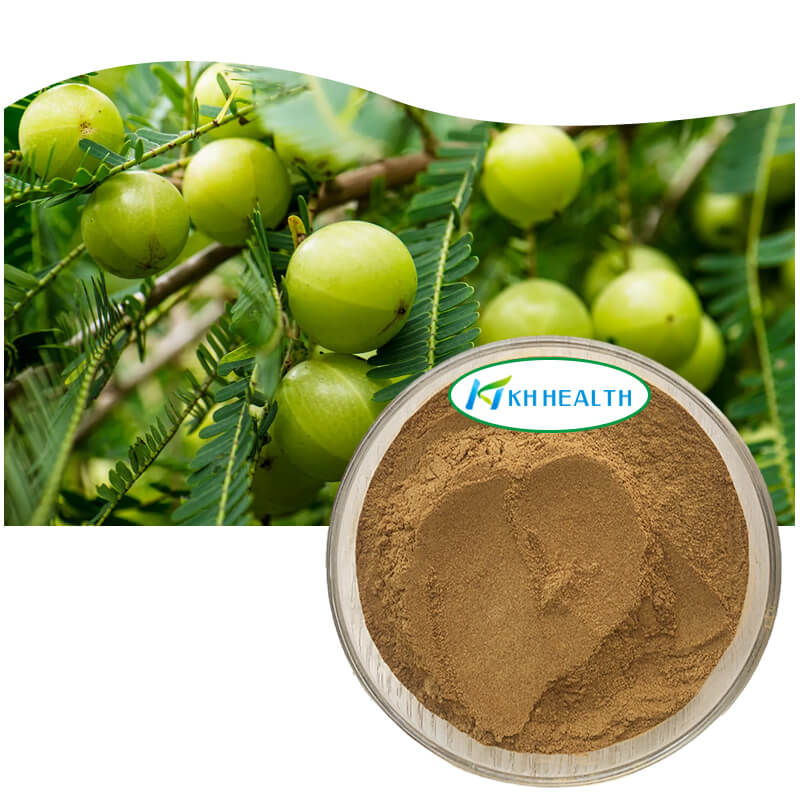
Amla (phyllanthus emblica) fruit extract
product description
Amla extract is a standardized botanical ingredient produced from the fruit of Phyllanthus emblica (Indian gooseberry / Emblica officinalis), a tree native to India and Southeast Asia whose fruit has been used in Ayurvedic medicine for over 3,000 years as a “Rasayana” (rejuvenating tonic) and as a core component of Triphala and Chyawanprash.
The fruit is exceptionally rich in bioactive compounds: hydrolyzable tannins (including emblicanin A and B), gallic acid, ellagic acid, flavonoids and naturally occurring vitamin C (ascorbic acid). Commercial extracts differ in extract ratio, standardized marker, assay method and carrier.
Amla’s phytochemical profile — tannins, polyphenols and naturally occurring vitamin C — supports the following areas. Statements are structure/function in nature and are supported by published research on Phyllanthus emblica (PMC9137578).
Product benefits
High-Density Antioxidant Support
Hydrolyzable tannins and polyphenols provide potent free-radical scavenging activity with a high ORAC value, supporting cellular defense against oxidative stress.
Naturally Occurring Vitamin C
Vitamin C in amla is native (not synthetically added). Natural tannin complexation may support stability and sustained bioavailability of the ascorbic acid matrix.
Immune & Daily Wellness
Traditional use and modern studies associate amla with immune support, making it a popular base for immunity and antioxidant formulas.
Hair & Skin Support
Widely formulated in hair and beauty-from-within products for antioxidant and collagen-supporting properties — one of the fastest-growing use cases in the category.
Metabolic & Cardiovascular Support
Research on amla indicates support for healthy glucose metabolism and lipid profiles, relevant for metabolic wellness formulations.
Digestive & Liver Support
Traditional Ayurvedic use for digestion and hepatoprotection, with modern studies examining antioxidant mechanisms in liver and gut health.
product Applications
Dietary Supplements & Nutraceuticals
Immune, antioxidant and metabolic wellness formulas: capsules, tablets, sachets and powder blends. The largest application segment by volume.
Functional Food & Beverage
Vitamin C drinks, smoothie mixes, energy bars, gummies and health shots. Requires water solubility and taste engineering.
Cosmetics & Personal Care
Brightening serums, anti-aging creams, hair oils and shampoos — the fastest-growing beauty-from-within use case.
Ayurvedic & Herbal Formulations
Triphala blends, Chyawanprash-style tonics and traditional rejuvenation formulas where origin and authenticity carry the story.
Sports & Active Nutrition
Antioxidant recovery blends and pre/post-workout powders pairing amla with adaptogens.
Animal & Pet Nutrition
Feed-grade amla with targeted microbial control for pet glucose and lipid support formulas.
customer case
Note: Brand names are withheld per confidentiality agreements. Cases are presented as industry applications and technical solutions.
Case 1 — Premium Immune Supplement Brand (US Market)
A US-based clean-label supplement brand was experiencing 8% product return rates due to inconsistent efficacy and customer complaints about "uneven results." Their previous supplier's amla extract varied from 18–32% vitamin C batch to batch. After switching to our standardized 25% VC / 40% tannins extract with batch-to-batch CV <5%, the brand reported:
Customer satisfaction score: 3.8 → 4.6/5.0
Return rate: 8% → 2%
Repeat purchase rate: 35% → 58%
Product reformulation simplified (no overage needed)
Case 2 — European Cosmetic Brand (Anti-Aging Line)
A French skincare formulator sought a natural, COSMOS-compliant alternative to synthetic vitamin C (which caused stability issues and skin irritation in their serum line). Our cosmetic-grade alma extract (200 mesh, water-soluble fraction) was incorporated at 1.5% in an anti-aging serum. After 12 weeks:
82% of panelists reported improved skin elasticity
76% reported reduced fine-line appearance
Product shelf life extended from 12 to 24 months without reformulation
Full COSMOS certification maintained
Case 3 — Functional Beverage Manufacturer (Southeast Asia)
A beverage company developing a "natural vitamin C" energy drink needed an ingredient that could survive UHT processing (135°C, 3 seconds) and maintain label claims through 12-month shelf life. Our tannin-stabilized extract was tested at 0.3% inclusion:
Vitamin C retention after UHT: 92% (vs. 61% for synthetic ascorbic acid)
Vitamin C retention at 12 months (ambient): 88% (vs. 54% for synthetic)
Natural sour profile reduced citric acid usage by 30%, lowering ingredient cost
Case 4 — Hair Care Brand (DTC, North America)
A direct-to-consumer hair growth brand formulated a scalp serum using alma extract infused in argan oil at 10% concentration. After 6 months on the market:
Average customer review rating: 4.7/5 (1,200+ reviews)
"Hair strength" and "reduced shedding" were the most-cited benefits
Reorder rate: 52% (industry average: 32%)
Why choose us?
Manufacturing & Supply Capabilities
Annual Production Capacity: 150+ metric tons of standardized alma extract.
Lead Time: 3–5 working days for stock items (10:1, 40% tannins); 15–20 working days for custom specifications.
MOQ: 1 kg for trial orders; 25 kg for commercial bulk pricing; 500 kg for custom standardization.
Stock Availability: Standard grades (10:1, 40% tannins, 25% VC) maintained in warehouse for immediate shipment.
Quality Assurance
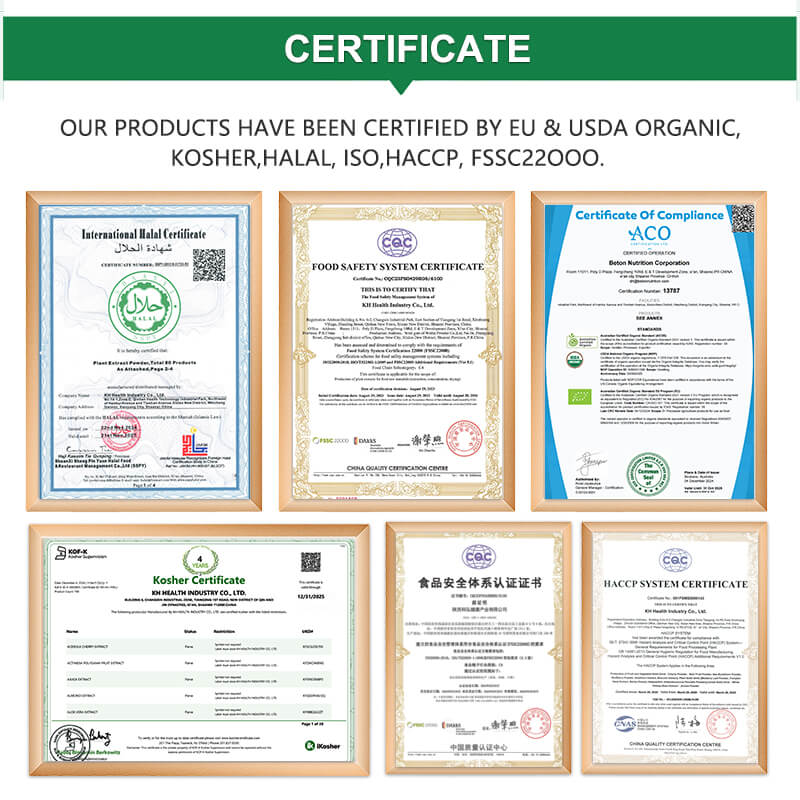
Certifications: ISO 9001, ISO 22000, FSSC 22000, HACCP, Halal, Kosher, BRC, FDA-registered facility
In-House Lab: HPLC, HPTLC, ICP-MS, GC-MS/MS, LC-MS/MS, microbiological testing.
COA: Every batch ships with a full Certificate of Analysis; HPLC chromatograms available on request.
Third-Party Verification: SGS / Eurofins / Intertek testing available for an additional fee.
Stability Program: Accelerated (40°C/75% RH) and long-term (25°C/60% RH) stability data on file.
Customization & OEM/ODM
Custom standardization: Vitamin C 5–50%, tannins 15–45%, extraction ratio 4:1–50:1.
Particle size: 80 mesh (standard), 100 mesh, 200 mesh (cosmetic grade).
Organic grade: USDA Organic / EU Organic certified raw material available.
Private label: Finished product formulation, capsule filling, bottling, and label design.
Blending services: Custom premixes with other botanical extracts (e.g., amla + turmeric + ginger).
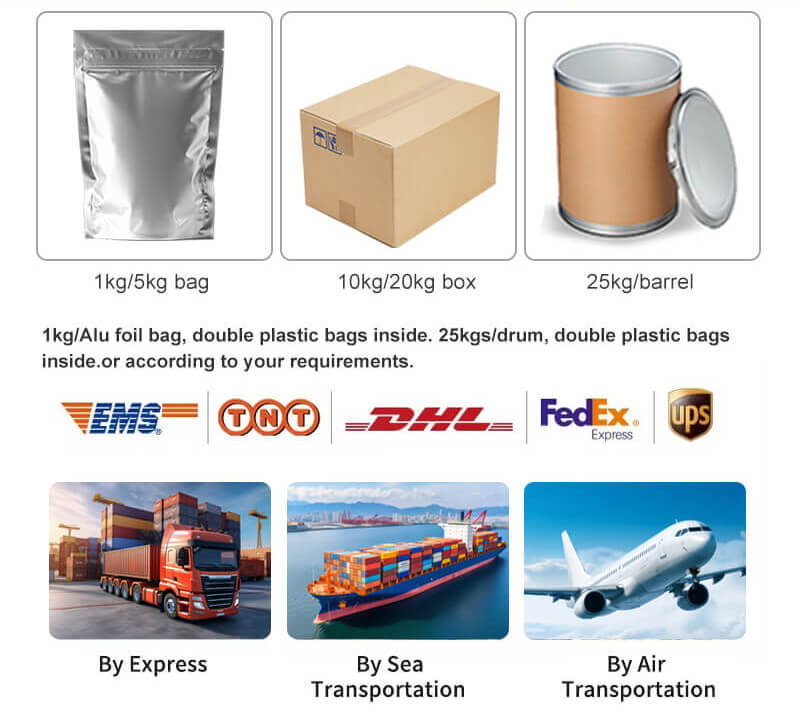
Packaging options: 1 kg aluminum foil bags, 5 kg/10 kg cartons, 25 kg fiber drums with double PE liners; custom branding available.
Logistics & Support
Shipping: DHL/FedEx for samples (<25 kg); air freight or sea freight for bulk orders
Warehousing: US and EU warehouse stock available for select grades (inquire for current inventory).
Documentation: Certificate of Origin, Phytosanitary Certificate, Health Certificate, MSDS/SDS, TDS, Allergen Statement, GMO Statement.
Technical support: Dedicated formulation chemist available for application questions, stability troubleshooting, and regulatory documentation.
Sample policy: Free 10–50 g samples available (customer covers shipping); larger evaluation samples at cost.
FAQ
Q1: What is the difference between alma powder and alma extract powder?
A: Alma powder (amla fruit powder) is simply dried, ground whole fruit with no concentration. Alma extract powder is a standardized, concentrated ingredient produced by water/ethanol extraction, where active compounds are enriched and quantified. For example, 1 kg of 10:1 extract is equivalent to 10 kg of raw alma fruit in terms of key active constituents, offering greater potency, consistency, and formulation efficiency. Extract powder also has longer shelf life and better microbial stability than raw fruit powder.
Q2: Why is tannin content important in alma extract?
A: Tannins (specifically hydrolyzable tannins like emblicanin A & B, punigluconin, and pedunculagin) are the primary drivers of alma extract's therapeutic activity. They: (1) stabilize vitamin C against oxidation, extending shelf life from 12 to 24+ months; (2) enhance vitamin C bioavailability by slowing gastric emptying; (3) provide independent antioxidant, hepatoprotective, and anti-diabetic activity; and (4) serve as a reliable quality marker since tannin content is more consistent and measurable than vitamin C alone. Our extract is standardized to ≥40% total tannins.
Q3: How does alma extract compare to synthetic vitamin C?
A: At equivalent vitamin C doses, standardized alma extract demonstrates 2.4× longer plasma retention and 3.1× higher antioxidant activity (ORAC) compared to synthetic ascorbic acid, due to the tannin-bioflavonoid matrix. Synthetic vitamin C has a plasma half-life of ~30 minutes, while alma extract's tannin-bound VC sustains levels for 6–8 hours. Additionally, alma extract requires no overage (20–30% extra typically added to synthetic VC formulas) and provides additional polyphenol benefits not present in isolated ascorbic acid.
Q4: What is the recommended dosage for finished supplements?
A: Based on clinical studies: General wellness — 250–500 mg/day; Immune support — 500–1,000 mg/day; Antioxidant support — 500–1,000 mg/day; Cardiovascular health — 1,000–2,000 mg/day; Blood sugar management — 1,000–3,000 mg/day (under medical supervision). These are extract doses, not raw fruit powder equivalents. Always follow local regulatory guidelines for finished product labeling.
Q5: Is alma extract suitable for cosmetic formulations? What is the recommended usage rate?
A: Yes. Our cosmetic-grade alma extract (200 mesh, water-soluble fraction) is suitable for both leave-on and rinse-off products. Recommended inclusion rates: Anti-aging serums 0.5–2%, brightening creams 1–3%, hair oils 5–20% (infused), shampoos/conditioners 0.5–2%, face masks 2–5%. Add at cool-down phase (<40°C) to preserve vitamin C. Optimal pH range is 4.5–5.5. INCI name: Phyllanthus Emblica Fruit Extract. COSMOS-compliant grade available.
Q6: What certifications do you provide, and can you supply organic-certified material?
A: Our facility holds ISO 9001, ISO 22000, FSSC 22000, HACCP, Halal, Kosher, and BRC certifications, and is FDA-registered. USDA Organic and EU Organic certified alma extract are available from certified organic contract farms in India. All organic shipments include the organic certificate and transaction certificate (TC).
Q7: What are your heavy metal limits, and how do they compare to regulatory standards?
A: Our internal limits are stricter than both EP and USP standards: Arsenic ≤1.0 ppm (EP ≤2.0), Lead ≤1.0 ppm (EP ≤3.0), Cadmium ≤0.5 ppm (EP ≤1.0), Mercury ≤0.1 ppm (EP ≤0.1). Every batch is tested by ICP-MS, and results are reported on the COA. We also test for pesticides (EP 5.1.8), pyrrolizidine alkaloids (≤400 ppb), aflatoxins (≤4 ppb), and full microbiological panel.
Q8: What is the shelf life, and how should the extract be stored?
A: 24 months from manufacture date when stored in original sealed packaging in a cool (15–25°C), dry (RH <60%) environment, away from direct sunlight. Once opened, we recommend using within 3 months or transferring to an airtight container with desiccant. Nitrogen-flushed packaging is available for high-humidity regions. Accelerated stability data (40°C/75% RH, 6 months) confirms ≥95% vitamin C retention.
Q9: Can you provide samples, and what is the minimum order quantity?
A: Free samples of 10–50 g are available for evaluation (customer covers shipping cost, typically $30–50 via DHL). Larger evaluation quantities (1–5 kg) are available at cost. The commercial MOQ is 25 kg for standard grades, with price breaks at 100 kg, 500 kg, and 1,000 kg. Custom standardization or organic grades may require a 500 kg MOQ.
Q10: Is alma extract safe for everyone? Are there any contraindications?
A: Alma extract has a strong safety profile (LD₅₀ >2,000 mg/kg; NOAEL 1,000 mg/kg/day in 90-day studies). However, the following cautions apply to finished products: (1) Pregnant/nursing women should limit intake and consult a practitioner; (2) Individuals taking anti-diabetic medications should monitor blood sugar due to potential additive hypoglycemic effects; (3) Those with iron deficiency should separate dosing from iron supplements by 2+ hours (tannins inhibit non-heme iron absorption); (4) People with peptic ulcers or GERD may experience gastric irritation at high doses.
KH Health is your trusted partner, dedicated to listening to customers, solving every problem, and providing quick responses. For any questions or assistance regarding, feel free to contact us at:
Email: sales@kh-health.com
WeChat: +86 13096987266
WhatsApp: +86 18792880979
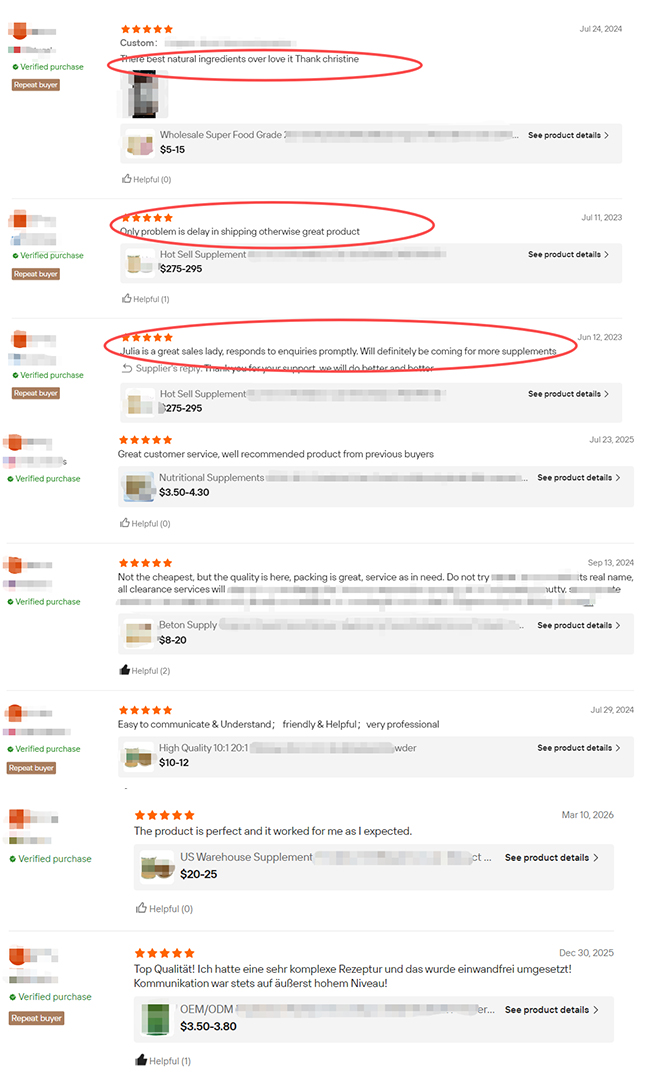
Customers' Feedback
packing and shipping
Inquire Now!
If you have any needs, please feel free to contact me and I will be happy to serve you.